What are we talking about when we imagine a Mythos with no Cultes de Goules or De Vermis Mysteriis? Where Nyarlathotep is just one more faceless, alien outer god – not a singularly sinister entity that truly sees humanity and, at times, seems almost human itself? We are talking about a Mythos without Robert Bloch.
Despite having considered myself “into the Mythos” for more than 30 years now, Robert Bloch was not an author I had read much of or knew much about (see “A Little More on Robert Bloch” below). Recently, at my local used book store, I picked up a copy of the 2nd edition of Mysteries of the Worm, Chaosium’s collection of Bloch’s cosmic horror and Mythos stories. Those stories sufficiently impressed me to do a deeper research and reflection drive. That, in turn, left me sufficiently impressed to put together review of Mysteries of the Worm combined with a short essay on Bloch and his contributions to the Mythos.
Most of the stories in Mysteries of the Worm qualify as Lovecraft Pastiche. That term, “pastiche” (and especially “Lovecraft Pastiche”) is typically used dismissively. Here, that is not my intent. These are stories that are both excellent and enjoyable, but executed in imitative homage to Lovecraft, rather than what we came to know as Bloch’s genuine authorial voice.
It is true that Bloch lacks the raw, weird power of Lovecraft’s imagination. At the same time, for all the idiosyncratic charm of Lovecraft’s writing, though it may be heresy, I argue Bloch is better than Lovecraft at constructing stories and using words. If this collection is pastiche, it is delightful pastiche. That being said, the most memorable stories in Mysteries of the Worm tend to be ones where, among the homage, we can still occasionally hear Bloch speaking as Bloch.
A Little More on Robert Bloch
“Mysteries of the Worm”-era Robert Bloch hard at work.
Robert Bloch (1917-1994) is familiar to most Mythos readers for two reasons:
First, he wrote the novel Psycho upon which Hitchcock’s movie was based (not, as is sometimes reported, the screenplay itself). This launched a successful Hollywood career and made Bloch one of the few early Mythos authors to enjoy mainstream success during his lifetime. This recognition included (and, yes, I totally cribbed this from Wikipedia) the Hugo, Bram Stoker, and World Fantasy awards. He served as president of Mystery Writers of America and was a member of the Academy of Motion Picture Arts and Sciences.
Secondly, Bloch was the author of the well-known “Shambler from the Stars” a 1935 tale in which, with Lovecraft’s permission, a New England “mystic” clearly intended to be Lovecraft, meets a gruesome end. Lovecraft returned the favor in 1936’s “The Haunter of the Dark,” killing off the story’s protagonist Robert Blake. Dedicated to Bloch, “Haunter” is the only story Lovecraft ever dedicated to a specific individual. Both “Shambler” and the third story in this cycle, Bloch’s 1950 “The Shadow from the Steeple,” are included in Mysteries of the Worm. “Shadow” ties up loose ends from Lovecraft’s “Haunter” while giving readers a chilling glimpse of what Outer God Nyarlathotep is up to in the atomic age.
Through teenage explorations of Weird Tales magazine, Bloch became a great fan of Lovecraft and the two began corresponding in 1933. As he did for many others, Lovecraft became a mentor to Bloch in both the craft of writing and the business of writing.
As an author, cosmic horror in a Lovecraftian vein is something to which Bloch would periodically return throughout his life. But, beginning about the time of Lovecraft’s death in 1937 (a loss which hit the young Bloch very hard) he began moving away from cosmic horror, especially Mythos horror, as a staple of his output. This process was largely complete by the mid-1940s. Among the many kinds of tales Bloch spun in a career spanning more than half a century, he excelled at, and indeed helped establish, the genre of crime horror. While Psycho arguably meets the criteria of crime horror it is “Yours Truly, Jack the Ripper” which is Bloch’s superlative accomplishment in this regard.
To consider Bloch, as a complete person, a “Mythos author” requires squinting and looking from exactly the right angle. Bloch was not a Mythos author or, more precisely, not only a Mythos author. But Mysteries of the Worm shows why an understanding of the Mythos, especially a literary history of the Mythos, is incomplete without a working knowledge of Bloch’s work and contributions.
Essential Contributions
Mysteries of the Worm certainly can be approached and enjoyed simply as a collection of Mythos and cosmic horror. But for scholars, completionists, and serious fans, the collection has additional value. Mysteries of the Worm highlights exactly how extensive Bloch’s contributions to the Mythos are.
Of the multitude of Mythos tomes, there are four I consider tier-one both for their evocative power and for their ubiquitous and enduring presence in Mythos fiction over the decades: The Necronomicon (of course), Cultes de Goules, De Vermis Mysteriis, and Unaussprechlichen Kulten. We can thank Lovecraft for the first of those, and Howard for the last. The other two, however, are Bloch’s creations.
De Vermis Mysteriis (“Mysteries of the Worm”) and its diabolic author, Ludvig Prinn, first appear in Bloch’s story “The Secret in the Tomb.” Cultes des Goules makes it first appearance in “The Suicide in the Study,” and comes with a much more interesting backstory. The tome’s author, Comte d’Erlette, is not entirely fictional. Rather he is a Tuckerization and alter-ego of fellow Lovecraft Circle member August Derleth (Derleth/d’Erlette).
Depending on who is telling the tale, the unhinged Comte was either a gentle or not-so-gentle dig at Derleth’s rather aristocratic airs. While, strictly speaking, beyond the scope of this article, I can’t resist running down the rabbit hole of the Comte’s literary history a little further. Lin Carter later doubled-down on Bloch’s Tuckerization by ascribing to the Comte the same controversial “war in the heavens” division among Mythos entities utilized by Derleth himself. Derleth, however, may have had the last laugh by using his alter ego in two stories of his own, “Adventure of the Six Silver Spiders” and “The Black Island.”
Traditionally, creation of Nephren-Ka, the cursed Pharaoh of Ancient Egypt, whose name was struck from monuments by the priesthoods of his more benign successors, has been ascribed to Lovecraft’s “The Haunter of the Dark” Lin Carter tells us this is not exactly so. According to Carter, Bloch’s story “Fane of the Black Pharaoh,” though not published until 1938, had been written prior to “Haunter in the Dark” and that Lovecraft had already seen, and been impressed by, Bloch’s manuscript prior to writing “Haunter.”
It is Bloch’s extensive use of the Pharaoh which solidifies the connection between Nephren-Ka and Nyarlathotep. Some have interpreted Nephren-Ka as a worshiper or even high priest of Nyarlathotep. Others have seen the Pharaoh as nothing less than an avatar of the Outer God. (I wonder how a greater awareness of Bloch’s take on Nephren-Ka might have influenced my own borrowing of the Pharaoh for my novella “The Dreamquest Beast,” had I been more cognisant of the connection at the time I was writing).
Nyarlathotep, from the 2001 short film of the same name(based on the Lovecraft story of the same name).
Nyarlathotep is, in several ways, distinct among the Outer Gods of the Mythos. First, he is the only one consistently presented as having a mind and personality in the sense that humans understand those concepts. Second, he is the only Outer God with a genuine and specific interest in humanity, albeit a perverse and malefic one. A case can be made that these unique aspects of Nyarlathotep begin with Bloch’s connection of Nyarlathotep and Nephren-Ka.
About the Collection
It’s ghouls a go-go in Robert Bloch (Image: HotPot AI)
Every author has their pet elements which they return to again and again, whether they are consciously aware of it or not. As Mysteries of the Worm makes plain, Bloch is no exception. He is clearly fascinated by Ancient Egypt. Egypt at the time of the Pharaohs, or its trappings transported to other times and places, feature in six stories in the collection, including some of those aforementioned stories which have been so essential in creating Nyarlathotep as we know him. It also seems, of all Lovecraft’s core creations, the idea of ghouls really grabbed Bloch’s imagination. Three tales in Mysteries of the Worm feature ghouls, or creatures so like ghouls as to make no difference.
Many of the collection’s stories feature the elements or flavor of pulp coexisting alongside cosmic horror. These pulp elements are not as pronounced as with Robert E. Howard or Clark Ashton Smith, but sound a frequent beat in Mysteries of the Worm nonetheless.
One thing which separates Bloch’s Lovecraft pastiche from the genuine article is the greater diversity in backgrounds and personalities of the protagonists present in Bloch’s work. This is to the collection’s benefit, helping stories feel more individual and distinct and less like copy/paste templates.
I have not endeavored to comment on every story included in Mysteries of Worm. Rather, I have singled out for mention those which either help illustrate broader trends and patterns in Bloch’s work or are singularly notable for their own merits (or, in one case, lack thereof).
“The Grinning Ghoul” in June 1936 Weird Tales.
The collection’s beginning is dominated by those tales which are the most strongly Lovecraft pastiche. As discussed earlier, this is not necessarily to their detriment. For the most part, this is good pastiche. The strongest examples, however, serve up their homage with at least a slight twist. “The Faceless God” feels like a Bloch doing a pulpy riff on “Under the Pyramids.” For all its essential Nyarlathotep lore, it is less of a Mythos story than dark pulp with a Mythos macguffin. “The Grinning Ghoul” is very much in the vein of “The Statement of Randolph Carter.” If Carter had the stones to follow Harley Warren into the depths. “The Brood of Bubastis” has the shape and feel of Lovecraft’s “The Rats in the Walls,” but combines an Egyptian twist with outre ideas of prehistoric population migrations which even Robert E. Howard would have envied.
“Creeper” in July 1937 Weird Tales.
If I had to pick one story in this collection to ‘vote off the island,’ it would be “The Creeper in the Crypt.” There is so much not to love here. A ghoul story that is less effective than Bloch’s similar offerings. A flat and weak point-of-view character who is mostly a passive observer to the story’s events. An ineffective homage to Lovecraft by setting the story in an Arkham that feels nothing like Arkham. Some unfortunate ethnic stereotypes (while common enough in the Lovecraft Circle, something Bloch usually manages to avoid). Yet the story is not without interest as an early example of Bloch’s combining crime fiction with horror, even if not a particularly successful one.
Two stories in Mysteries of the Worm stood out to me for feeling ‘out of time’ with their publication date (coincidentally, in both cases, 1937).
Sebek, by classic pulp illustrator Virgil Finlay.
“The Secret of Sebek” is another of Bloch’s Pharaonic Egypt-adjacent tales. This time, however, the setting in New Orleans during Mardi Gras and a secretive masquerade ball of rich weirdos which, of course, conceals a far darker purpose. “Secret” feels far more modern than its publication date. In fact, it feels tailor-made for adaptation as a 1970s giallo film.
“The Mannikin” is a curious story which, at once, looks both forward and back from its 1937 publication date. The set pieces put into place at the story’s beginning are pure Gothic, far more Poe than Lovecraft. The story’s ultimate resolution, however, is very modern. Strip away those set-dressing elements I mentioned, and it is easy to imagine “The Mannikin” as an X-Files episode. Indeed, at the risk of some oblique spoilers, it has significant commonalities with the well-known second-season X-Files episode, “Humbug.”
Mysteries of the Worm presents two of Bloch’s most celebrated short stories, “The Shadow from the Steeple” and “Notebook Found in a Deserted House.”
“Steelple’s” Shining Trapezohedron by Red-Vanguard on DeviantArt.
“Shadow from the Steeple” completes the trilogy begun by Bloch with “The Shambler of the Stars” and then answered by Lovecraft’s “The Haunter of the Dark.” Bloch’s final installment, however, postdates the first two offerings by a decade and half. Published in 1950, it takes classic cosmic horror, very unsettlingly, into the world of nuclear power and the military-industrial complex. Its presentation of a disturbingly human Nyarlathotep, eagerly using those tools and others to bring maximum woe to humanity, is a further example of how much Bloch has influenced our perception of this Outer God.
“Notebook found in a Deserted House,” channels the paranoia and uncertainty of an isolated protagonist as the agents of the Mythos slowly circle in, epitomized in Lovecraft’s “Whisperer in Darkness,” better than almost any cosmic horror story, save the aforementioned HPL tale. Bloch’s literary device of writing in the style of his protagonist, an uneducated farm boy named Willie Osbourn, has been widely acclaimed. Here I admit to being in the minority, I find it distracting (in much the way I find Lovecraft’s occasional attempts at ‘rustic’ dialogue and accents distracting). That may diminish the tale’s impact for me, but certainly does not dissipate it.
Mysteries of the Worm also contains three standout stories which are not as well known as “Notebook” or “Shadow.”
“The Unspeakable Betrothal” is a shining jewel in this collection. Therefore, it is remarkable that Bloch himself considered the story something of a disappointment. For me, “Unspeakable Betrothal” stands out for two reasons. First, excepting Robert E. Howard, it is one of the few examples of a member of the Lovecraft Circle writing a strong, compelling woman with agency (and the protagonist, to boot). Second, it intriguingly explores the questions “What if the otherworldly entities of the Mythos aren’t truly evil or malevolent, what if they are simply alien in the most profound sense of the word?” and “What what if those alien entities tried tried to form a genuine connection with an, admittedly very unusual, human?”
Sure, AF #9 had “Unspeakable,” one of Bloch’s best stories … but it’s really hard to compete with whatever’s going on with that cover.
But is it Cosmic Horror?A man with cameras.
I’ve seen more than a few stories by multiple authors attempting to explore the intersection of photography with the Mythos. Excepting one unfinished, unpublished story shown to me by its author, I had found all of them unsatisfying. Until Bloch’s “The Sorcerer’s Jewel,” which explores that theme with a heavy dose of pulp added to its cosmic horror. Bloch manages to pack in a rich backstory and some truly memorable secondary characters in a fairly short story. I think it is this ability to both sell the reader on the world and make them care about the characters that allows “The Sorcerer’s Jewel” to succeed where so many other stories built around the same premise have failed.
Making the Cover: “Terror in Cut-Throat Cove” in the June 1959 Fantastic.
“Terror in Cut-Throat Cove,” the collection’s true stand-out, is also its final selection as well as one of its longest. It delivers Cosmic horror wrapped in pulp that, if not precisely crime horror, is most certainly noir horror. In every way, “Terror” plays to Bloch’s strengths. Unlike some of the other selections in Mysteries of the Worm, in “Terror” Bloch has selected a protagonist which allows the author’s intelligence and broad knowledge to shine through. Originally published in 1959, at a time when Bloch’s career as a screenwriter was still a couple years in the future, nevertheless all those skills enabling Bloch to find success in Hollywood are admirably displayed in “Terror.” Reading the story, it is impossible not to see the screen adaptation unfolding in your mind. “Terror’s” three principal characters are incredibly well detailed, with their interactions and conversation as much character-driven as story-driven (sadly, a rarity even in the best Mythos fiction) and reeking (in the best possible way) of noir rather than cosmic horror. Yet, “Terror” is undeniably cosmic horror. But unlike the Lovecraft pastiche which dominates the collection’s early selections, with “Terror in Cut-Throat Cove,” Mysteries of the Worm concludes with cosmic horror in Bloch’s own voice.
(As a note to interested readers, Chaosium has since released a third edition of Mysteries of the Worm, expanded to include tales not present in the two previous editions)
Last month at MileHiCon in Denver, I got drafted into the “flash fiction chopped” competition after a couple of scheduled contestants pulled no-shows.
Action Shot: Me, mid-story, chronicling a romance between a dog and a lighthouse…as you do (Photo: HC Werner)
The rules were simple. The audience, improve-style, supplied the contestants with a protagonist, a location, and a complication. The competing authors then had eight minutes to write a story incorporating those elements. Afterward, each author read their story aloud and the audience voted one of the authors “off the island.” Lather, rinse, repeat until only one author remained.
As it turns out, I was that author.
I’ve gotten way more interest on social media about this than I expected, so I thought I’d share my flash fic compositions with anyone who was interested enough in the initial post to check them out. [In the interest of full disclosure, I have done some very basic clean-up on the selections to correct spelling, punctuation, and the occasional omitted article.]
To give this all a pretense of substance, I’ve also added a short section at the end, discussing some of the lessons I’ve taken away from this session which may be useful to those of you who find yourselves in similar competitions.
(CAVEAT: For those of you who may be encountering my writing for the first time through this post, these selections are not representative of my published writing)
ROUND ONE
Protagonist: The Haunted Woman
Location: Evergreen, Colorado
Complication: Stuck in Traffic
Julia, the haunted woman, presumably (Image: Not HotPot AI’s best work).
Julia had gotten use to ghosts. She had seen them childhood, since an unfortunate accident involving a vending machine and a tarot deck. But ghostly road construction, outside was something new. Up ahead, just outside of Evergreen, Colorado, she could see the construction workers, or rather see through them, as the road was shut down and a truck loaded with used furniture and a VW microbus idled in front of her.
The other drivers were freaked out, their reactions ranging from catatonia to panic and praying. But Julia was the haunted woman. This being old hat, she flagged down the ghost who seems to be in charge. “What’s going on” she asked?
“Road ghosts,” the ghost in charge explained, as it that explained everything.
“Road ghosts?” Julia repeated.
“What did I call them when I was alive?” the ghost took the ghostly cigar out of his mouth, and looked thoughtful. “Pot holes. He paused. “Think about it, pot holes are basically the ghosts of a road. They have their own stories, their own lives, their own pathways to becoming to ghosts.”
“That’s great,” Julia said, “but I’m really trying to get to some town in Colorado the author has heard of.” And then, because the author hadn’t finished his story, a giant machine came out of the sky moved Julia and the rest of the cars past the construction.
ROUND TWO
Protagonist: A sentient attack drone
Location: A deserted beach
Complication: Too many spiders.
BOB (Big Old Bomb) talks with The Spiders. (Image: HotPot AI)
Big Old Bomb, BOB for short, the sentient attack drone, was enjoying its first vacation since the supreme court (not our currently supreme court, obviously,) ruled that AI entities, devices, automata and machines were covered by the same labor laws, including a minimum of two week’s vacation, as everyone else.
A standard query search had indicated humans often liked to vacation on beaches, so BOB thought it would start there. The same search indicated that the combined presence of red tide and medical waste would reduce prices. That seemed to have worked, the prices were low. And the beach was restful. It was, in fact, deserted. BOB had taken long walks by itself. It had read Sartre. It had argued with strangers, including other sentient attack drones, on the internet.
By the fourth day, BOB was bored. It decided to checked out the small beach-side cabaret, the only other place that seemed to be inhabited. A jazz quartet was followed by a flamenco dancer, who was followed by a woman playing the euphonium while reciting limericks in dead languages. The compere then announced the headliner, a rock act. The singer had spiky orange-ish hair, pale skin, and elaborate face makeup. His backup band, the Spiders, were nowhere to be found. “But where are the spiders?” BOB asked and went to go look for them,
He found them all behind the cabaret smoking. The Spiders, too many Spiders, an excess of Spiders, in fact. “Why aren’t you at the gig?” BOB asked.
“Our singer is impossible,” one of the Spiders said, “Always making love with his ego.” So BOB became the Spiders’ new lead singer. And the rest, as they say, is rock ‘n’ roll history.
ROUND THREE
Protagonist: A dog
Location: A lonely lighthouse.
Complication: a burnt bundt cake
A love story for the ages (Image: HotPot AI)
It was the kind of love story you remember you entire life, a classic love story, between a dog who happened to be a conductor of the Philadelphia Philharmonic orchestra and a lonely light house. Of course the lighthouse was lonely, it was a lighthouse, it’s hard to meet people when you’re a lighthouse. Except lighthouse keepers, but they’re the bad boys of recluse and hermit set, all moroseness, all tragedy and posturing … no long walks on the beach, no poetry.
So the light house decided to put its presence out there, like a beacon. Its profile, its dating profile, was very visible, especially to ships traversing the coast at night. But it also reached the wall of the living room of the room where the dog lived. The dog barked out its response, but the lighthouse could not hear. The only people who could hear were the dog’s owners. Damn it, Princess. Go to sleep! they said.
The beacon returned, again the dog professed its love. Again, came the cry, Damn it, Princess go to sleep!!
Again, the beacon returned. Again the dog professed its love. Damn it, Princess go outside!!!
And so her owners let Princess outside. The dog ran, in obligatory slow motion, with soft lighting, a wind machine blowing its fur. You know the scene, you’ve seen it a million times. You can even hear the sound track, take a moment, in your mind, to pick out the perfect song.
“Shit!” the author said, his authorial voice full of conflict, “there was supposed to be a burned bundt cake in here somewhere.”
So, what did I learn?
I want to be clear, I don’t think I won “flash fiction chopped” because I was churning out the highest quality prose at the front table. In fact, I think this was distinctly not the case. In that case, why did I win? What was I doing that put me over the top of competitors who were actually putting out better writing? What can you learn from my experience that might help you if you find yourself in a similar situation? I think there are three things to note here.
Read the Room
Sitting down at my laptop, my impression was that we had an audience in the mood for goofy fun rather than stirring prose. This seemed confirmed when, after the first round, the audience voted to eliminate the author who had written (in my opinion) the best, tightest story but one that was played absolutely straight. If you want to win, write what your judges want.
Performance Matters
Something I realized, which I think some of my competitors missed, is that those four words, “read your selections aloud,” changed everything. That made the competition at least as much about showmanship as authorship.
A Weak Ending is Better Than No Ending
The first thing I did, after writing the opening paragraph, was to write a conclusion. I think having an ending, even if not a very good or even germane one, made my stories feel tighter than some others that were actually better written but stopped abruptly when our eight minutes were up.
Few projects in recent years have excited me as much as the found footage horror-fiction podcast, The Holmwood Foundation. Let’s be honest, it’s hard to resist a podcast with the tagline “A secretive organisation. Two antagonistic work colleagues. Dracula’s severed head…” Or a pilot episode combining the Gothic essence of Dracula with the quirky fun of X-Files or Warehouse 13. Or the biographies of the cast, crew, and creators behind the podcast.
The Holmwood Foundation is in a sprint to meet their Kickstarter goals by November 14. My friends, this is a top-tier project. The team behind Holmwood is being reasonable, even frugal, but top-tier comes with a price tag. I am putting my website in their service to share my excitement with readers (and, hopefully, convey what a loss it would be if this project doesn’t make).
Holmwood is the brainchild of Georgia Cook and Fio Trethewey, with a script-editing touch by Katharine Armitage, all speculative fiction veterans with sterling credentials in horror, the Whoverse (since my website sometimes veers into weird areas, I should clarify that is Who as in “Doctor” not “Horton hears a” or “Live at Leeds”) and other strange, wonderful corners of speculative fiction. To bring their vision to life, they’ve assembled a stellar cast and crew with some very big credits under the belt.
Co-creator Fio Trethewey was good enough to give me some of his time at this very busy moment and answer a few questions I had about the project. It turns out Holmwood is, simultaneously, an idea both years and months in the making.
Fio Trethewey
“So, Georgia [Cook] is a massive horror fan, and I’m more a dark fantasy guy – but Dracula was something I loved ever since I was a teenager, and when we met and became good friends it was Dracula and the book that we bonded over. Over time, we talked about what we might do if we had the reigns on Dracula (we became friends during the era where Dracula 2020 graced our TV screens), and as such, the characters of Jeremy and Maddie were born, but we weren’t sure exactly what to do with them. If we needed to make them something original, away from Dracula, that was totally on the cards.
“Then, back in May, Georgia was asked to watch a found-footage Horror Film called Grave Encounters for a review podcast. It’s about a ghost-hunting TV show entering a haunted asylum and everything going very wrong from there. It’s a lot of fun, and while sitting at a convention table the following week, we suddenly wondered if our Holmwood concept would work as an audio drama.
“We wrote out a few scenes, and we realised it would—and now here we are seven months later with a pilot and a crowdfunding campaign for the full season!”
Set in the present day, in narrative continuity with Bram Stoker’s Dracula, Holmwood pulls back the curtain on the events of Stoker’s novel to reveal that, in the actual version of events, Dracula survived, or at least his head did (functioning, at least in the pilot episode, as a macabre MacGuffin for our protagonists).
After the events of Dracula, and Jonathan’s death, Mina and Arthur Godalming established an organization, the eponymous Holmwood Foundation. While presenting a public face of a philanthropic organization dedicated to the study and treatment of rare blood disorders, the foundation’s true purpose, while no less altruistic, is of necessity, the antithesis of public facing: protecting an unsuspecting world from Dracula and his minions.
Bram Stoker, ally of The Holmwood Foundation
I very much appreciate Holmwood’s metatextual wink and nod of making Stoker an early ally of the Foundation, charged with the essential task of preserving cautionary tales about the undead while also obscuring the horrid reality behind such tales by transforming Dracula himself into an allegedly fictional figure of funhouse horror.
Trethewey shared what he liked about Stoker’s Dracula and wanted to channel for The Holmwood Foundation and, conversely, what he wanted to move away from or update with new elements.
“Adaptions of Dracula often point at Dracula as this malevolent-yet-alluring villain that you’re supposed to be seduced by, particularly alluding to Mina and Lucy being corrupted by and desiring him, which is not what we took away from the book at all.
“In our version, we were certain we did not want Dracula as a potential love interest. And instead wanted to explore him as more of an eldritch horror.
“Also, The Crew of Light, our central protagonists of the novel, are usually merged, altered, or repainted in an unflattering light, in order to serve the aforementioned transformation of Dracula into an alluring figure. It’s something we would like to explore more in the coming seasons, particularly characters like Arthur and Quincey, whose characters are rarely given the chance to shine. Jonathan Harker is also very often sidelined, becoming the stuffy rival for Mina’s affections when Dracula becomes the central character – which is disappointing when Jonathan’s love for Mina, and what he would do for her, is such a vital part of his character journey, and the book.
“Lastly, there’s a lot of queer reading around Dracula that doesn’t often get explored in its adaptions, which we wanted to shed some light on – as queer writers with a queer cast!”
Sorry, Dracula, hearts are for staking not throbbing.
While there is certainly a place for Dracula-as-heartthrob, I admit I enjoy takes on the Count, such as Holmwood’s, which either cleave closer to the original Slavic folklore or embrace the conventions of eldritch horror. As a Texan, I am also very curious to see what Holmwood does with the character of Quincey Morris. Perhaps this is just me rooting for the hometown boy, but as a character with so much potential, I find Quincey almost criminally underutilized in the Dracula stories.
A Short Review of the Pilot Episode
Holmwood has a stellar pitch. But the devil or, in this case, the vampire, is in the details. Looking beyond the pitch and listening to its pilot episode: not only does The Holmwood Foundation live up to its description, it actually delivers more than it promises.
Whitby 2024: Ground Zero for Horror.
Listeners are dropped right into the action, after things have gone pear shaped, very pear shaped, at a foundation safe house in the Yorkshire seaside town of Whitby (sound familiar, Dracula fans?). More than simply an action sequence, the pilot episode is an adrenaline-fueled chase as the protagonists, pursued by Dracula’s thralls, reluctantly settle upon a dangerous cross-country journey to foundation offices in London to avoid putting innocent people in harm’s way. Along the journey, exposition unfolds in a fashion that feels integral and authentic to the chase.
We quickly meet our two sets of protagonists. The first are Maddie, junior archivist for the foundation, and Jeremy, a foundation executive. The second are … Mina and Jonathan Harker … through mechanisms not yet understood, periodically inhabiting the bodies of Maddie and Jeremy. That’s the kind of narrative device that is wonderful when it goes right, but is so easy to get wrong.
In the pilot episode, I was very impressed by Holmwood’s deft handling of this. It creates an emotional tension in which Jonathan and Mina, separated by death for over a century, never directly interact with each other but can hear each other’s voices and leave messages for each other on Maddie’s voice recorder. This is something which could easily skew into cornball or maudlin territory. It is to the credit of the podcast’s writers and actors that it never does, and instead comes across with genuine and earnest emotion.
This “four protagonists, two bodies” approach is also used to quickly and organically set up the “rules of the world,” essential for any form of speculative fiction, via exchanges between the modern protagonists and their 19th century counterparts.
NOT indistinguishable from magic.
As someone who primarily writes historical fiction (and is often aghast at how some of my colleagues portray people in the past), I was very gladdened by Holmwood’s presentation of Mina and Jonathan as intelligent, capable individuals who quickly grasp the operation and possibilities of technology such as audio recorders and mobile phones.
Episode One also reveals a layer to The Holmwood Foundation I did not expect. Beyond all its yummy Modern Gothic is some real crunch, pathos, feels — call it what you will. Holmwood is a story about people, relationships, and self-identity. And, if the writing and acting in Episode One is any indication, that may prove the most memorable aspect of what promises to be a very memorable series.
After a fair bit of wheedling, cajoling, and pleading, I convinced Trethewey to give us a tiny reveal about Episode Two. I’ll call it an exclusive, even if that isn’t, strictly speaking, accurate:
“Episode Two, huh? Well, Jeremy and Maddie still have some emotions to battle through after the end of Episode One, and there might be a train journey involved. Also, we’ve yet to say goodbye to the horrors from the Whitby Westenra building.”
To discover more about The Holmwood Foundation, check out their website and Kickstarter. And don’t forget to listen to the pilot episode.
(This essay has its origins in my research and thoughts for a similarly named panel taking place at NecronomiCon 2024 in Providence, Rhode Island.)
“It takes a great deal of courage to see the world in all its tainted glory and still love it.” – Oscar Wilde
“Pornokrates,” emblematic Decadent image by Felicien Rops
While I am most familiar with the French Decadents and their works, the above quote from the movement’s best known British (okay, Irish) practitioner is an apropos way to begin. In just 20 words, Wilde offers a summation of the Decadent mindset which is both informative and compelling.
Reaching its apogee in the final two decades of the 19th century, Decadence is an artistic movement and, to a lesser extent, a school of thought placing an individual’s aesthetic experience as the highest good, perhaps the only real good. While, in theory, that could code for any number of things, in reality there were a number of attitudes and interests shared by most Decadents. Those shared, consistent features are what we mean when we say “The Decadent Movement.”
These features include rejecting the value of anything external to the individual. While this encompasses conventional society as well as traditional norms and morality, the Decadents also rejected the value of unconventional or alternative norms, values, and societies. Nation, religion, society, indeed any structure or organization beyond the individual are viewed as inherently corrupt, bizarre, meaningless and doomed – indeed, in the Decadent paradigm, it could not be otherwise. Unlike many movements rebelling against tradition and conformity, the Decadents see the natural world, no less than the human society, as, at best, holding no real value and, at worst, as an impediment to actualizing an individual’s aesthetic experience.
The jewel-encrusted tortoise in Husymans’ “Against Nature” becomes a symbol of Decadence’s devotion to excess and aesthetic above all.
In the vacuum created by these broad-reaching rejections, the Decadents elevated libertine self-indulgence and solipsism into a philosophy of elegant nihilism. For Decadents, choosing beautiful and extravagant fantasy over bland and banal reality was not folly but wisdom. Within that context, an individual’s death is synonymous with the end of meaningful experience. Therefore, it is not surprising many Decadent artists displayed a preoccupation with death, decay, and the macabre. It is worth noting here that “Decadence” is French for “decay,” a word with both literal and symbolic connotations connecting to many of those elements which were at the movement’s heart.
All that is the Decadent Ideal. In reality, pursuing the biographies of Decadent artists uncovers many apparent contradictions with that ideal. Many of the Decadents could be warm, caring, and fiercely loyal individuals, exemplified by the lifelong friendship between poet Charles Baudelaire and artist Felicien Rops. Many Decadents cared deeply about the broader issues of the day. Most of the French Decadents were committed Dreyfusards, just as Wilde and Swinburne were passionate advocates for the cause of Irish liberty. Other Decadents wrote rich, beautiful descriptions of the natural world.
If you questioned them, I suspect the Decadents would say there was no real contradiction – because these choices were made, specific attitudes and behaviors embraced, to enhance personal experience, not because they held any extrinsic value.
A Daguerreotype of Decadence Around the World
France, Britain, and, to a lesser extent, the United States were the major centers for the Decadent Movement. It is true the movement had a presence in and impact on many other continental European nations and that some significant Decadents, most notably the Belgian visual artist Felicien Rops, came from elsewhere in Europe. I argue, however, that these regional European scenes remained very much in orbit around the French, and especially Parisian, Decadent scene.
Illustrating France’s role as the beating heart of Decadence, even an annotated list of key French Decadents approaches the scope of an essay of its own. Nevertheless, I have endeavored to name check its most essential figures. Still relatively well known, by his name and reputation if not his work, the poetry of Charles Baudelaire is in many ways the foundation upon which the successive Decadent Movement was built. Two other significant Decadent poets were Paul Verlaine and his protégé/lover, Arthur Rimbaud. That their tempestuous relationship finally suffered an irreparable break after Verlaine (probably accidentally) shot Rimbaud may be one of the most Decadent things ever. Octave Mirbeau was a novelist and playwright whose output places him on par with the poets already named.
Joris-Karl Huysmans and the tragically short-lived Comte de Lautreamont (nom de plume of Isidore Ducasse) are Decadents whose fame rests largely on the strength of a single work. Husymans’ Against Nature (sometimes translated as Against the Grain) is often cited, including for its lack of a traditional narrative or structure as well as its largely unsympathetic protagonist, as the one of the first modern novels. Against Nature has also cast long shadows. Its protagonist, the eccentric, solipsistic, and amoral dandy, Des Esseintes, was a significant inspiration for Wilde’s Dorian Gray and, therefore, on much successive avant-garde, weird, and supernatural/horrific fiction. Lautremont’s lengthy poem Songs of Maldoror is the tale of a bizarre and misanthropic megalomaniac, the eponymous Maldoror, who has not only declared a personal vendetta against God but, at times, seems to be engaged in a quest to kill his nemesis.
Deserving special mention in this essay is Theophile Gautier was a Decadent poet and author whose most notable work is the verse collection The Comedy of Death. Significantly, Gautier wrote several prose pieces which could be considered proto-Weird Fiction, including “The Mummy’s Foot” and “Clarimonde,” occasionally appearing under the title “The Dead Woman in Love,” the story of a young priest who falls in love with a vampire.
Aubrey Beardsley’s illustration for Wilde’s “Salome.”
British Decadents seem almost as numerous as their counterparts across the Channel. As noted, one of their leading lights, Oscar Wilde, still remains very much part of the common cultural consciousness – indeed, thought much better of now than by his own contemporaries. Perhaps just as paramount at the time, though fallen into obscurity today, was the novelist, playwright, and poet Algernon Charles Swinburne. In a short life of just 25 years, illustrator Aubrey Beardsley left a treasure trove of startling black and white images that make him perhaps Rops’ only real rival as the definitive creator of Decadent imagery. The author and critic Walter Pater served a function for British Decadence similar to that of Baudelaire in France. Illuminating the parameters of Decadence in its British incarnation, Pater declared that art and life should “burn always with this hard, gem-like flame.” While perhaps not as consistently dazzling in his output as Wilde or Swinburne, Ernest Dawson’s poem “Absinthia Taetra,” part horror story, part paen to that spirit beloved by the day’s avant-garde, is an unquestionable Decadent masterwork.
With their elevation of the individual and sworn enmity against convention and conformity, one might expect the Decadents to have been more accepting of women within their ranks. In reality, as much as any other artistic movement of the day, Decadence was largely a boys club. Britain supplies two of the few significant exceptions. Writing under the collaborative non de plumeMichael Field, were Katherine Harris Bradley and Edith Emma Cooper, aunt and niece, living together together in what most scholars now accept was a cosanguinous life partnership, and producing verse and drama under their shared pseudonym.
Decadence arrived in the United States largely through the stature accorded to Wilde by the literati and cognoscenti on the other side of the Atlantic. Two of the most significant American Decadents are a pair of half-brothers now nearly lost to memory: Edgar Saltus and Francis Saltus Saltus (not a typo). In a fitting nod to the link between the Decadent and the Gothic, both brothers now rest in Sleepy Hollow Cemetery. Robert W. Chambers is often cited as the pinnacle of American Decadence. For reasons I discuss below, that accolade is simultaneously well-earned and deceptive. While sometimes cited as members of the Decadent Movement, I would argue, based both upon being a generation younger than the core Decadents and the manner of utilizing Decadence in their work, authors such as H.P. Lovecraft and Clark Ashton Smith are more properly thought of as being influenced and inspired by the Decadents rather than Decadents themselves.
“The Supreme Vice” by Felecien Rops
Beyond those three heartlands of Decadence, if there is one figure who must be acknowledged it is the Belgian Felicien Rops. If Continental Decadence had many voices, it really had only one look … and that look was supplied by Rops. He was the illustrator of choice for Decadent writers and poets including d’Aurevilly, Baudelaire, Gautier, Huysmans, and Mallarme. Much of his work was considered pornographic, even by 19th century French standards, and often invokes occult or even explicitly Satanic imagery. More than almost any other Decadent, Rops’ life embodied the movement’s libertine, self-indulgent ideal, exemplified by the tersely-worded letter Rops received from his wife after his eight documented extramarital affair and, for much of his later life, shacking up in a tempestuous but ultimately stable-ish menage-a-trois with the Duluc sisters.
Words the Color of Jaundice
While I would be speaking beyond my expertise to say the Decadent Movement is unique in this regard, it is at least uncommon for its association with a particular color, yellow.
Yellow has long been identifiedwith Decadence … and the Decadents have long identified with yellow. (tarot deck from Arc Dream Publishing)
Yellow is, of course, the color of jaundice and we should remember the etymology of that English term, from the French jaune, literally “yellow.” Its adjectival form, jaundiced, has been used to express ideas, themes, and attitudes very much in harmony with the Decadent aesthetic. Recall, also, that Decadence is the French word for “decay.” While, today, black or gray are the colors most commonly associated with decay — with literal decadence in other words — in the 19th century it was yellow which served that function.
In the paper “Shades of Yellow: Representations of Change and Decay in Victorian Literature” Kate Khanna documents examples of this usage at a time when the Decadent Movement was flourishing on both sides of the English Channel. While it takes us a long way from Decadence, Khanna notes Dickens’ extensive use of yellow in Great Expectations to convey both literal and metaphorical decay. Consider Dickens’ descriptions of both Satis House and Miss Havisham herself. Similarly, Charlotte Bronte uses yellow to convey similar themes in Jane Eyre describing Lowood and its garden. Moving back to Decadence, Wilde equates the color with decay in at least two poems, “Symphony in Yellow” and “Impression du Matin.”
French Decadents had another reason for their affinity with yellow. At that time in France, works considered obscene, pornographic, disturbing, or amoral were frequently sold wrapped in concealing yellow cloth or paper, a kind of 19th century warning label or content advisory. Not only did such attributes characterize many Decadent works in the minds of the public, it was a characterization the Decadents themselves embraced, leading them to consider the yellow wrapping a badge of honor as well as a mark of artistic, if not moral, integrity.
It is interesting to note that one of the most common modern US editions of Husyman’s Against Nature, the Penguin Classics edition, uses as its cover art Franz Kupka’s painting “The Yellow Scale.” Kupka’s work shows a figure evocative of Against Nature’s Des Esseintes reclining on a high-backed chair and holding a cigarette as he regards the viewer with an expression of jaded disinterest. Only after taking in the subject matter does one notice the technique: almost the entire canvas, including the figure himself, is rendered in shades of yellow.
An issue of “The Yellow Book,” with cover illustration by Beardsley.
Bouncing back across the Channel, the British avant-garde literary periodical The Yellow Book published much content that was explicitly Decadent, including works by Ernest Dowson, Max Beerbohm, and the images of Aubrey Beardsley. The periodical also featured many contributions that, while not explicitly Decadent, showed clear influence from the movement. In choosing the name The Yellow Book, its editors and contributors were declaring themselves a kind of prurient avant-garde and aligning themselves with the simultaneously transgressive and trendy literature flourishing in France, then best exemplified by Decadence.
In addition to his poetry, Wilde’s prose and drama color-checked yellow on at least two significant occasions. The first was the enigmatic “yellow book” which was such a corrupting influence on Dorian Gray (and which Wilde may, in fact, have intended to be Huysmans’ Against Nature). But Wilde’s other reference, in An Ideal Husband, is actually more telling, when Mrs. Chevley proclaims that she “prefers books in yellow colors.” There are also unconfirmed reports Wilde was carrying an issue of TheYellow Book at the time of his arrest in 1895.
The common rendering of the Yellow Sign
Lest we forget that the subject of this essay is the Decadent Movement’s influence on weird fiction, one of the American masterworks of both Decadence weird fiction is Robert W. Chambers’ The King in Yellow. Chambers elevates the connection between the color yellow and decadence by making the collections’ mysterious King in Yellow, its play-within-a-play of the same name, and the cryptic Yellow Sign into archetypal embodiments of the Decadent aesthetic. While not always understanding the full context in which Chambers made that association, later weird fiction authors have often followed in his footsteps by using yellow as symbolic shorthand for decadence, corruption, and madness.
The Decadent Family Tree: Parents, Siblings, and Children
I argue that the Decadent Movement is one of Romanticism’s many children. Like its parent, and like Romanticism’s other children, Decadence rejects tradition as authoritative guide, it celebrates individuality over conformity, prioritizes emotion over logic, elevates the visceral above the rational, and prefers description over plot. But Decadence breaks with its parent movement in two important regards. First, it does not seek a “better way.” Indeed the idea of a “better way” is meaningless in the Decadent paradigm. Second, the Decadent Movement does not look to the natural world as a source of inspiration or guidance.
The Decadents’ toolkit was almost identical with two contemporary movements, Symbolism and Parnassianism. While Symbolism remains widely understood, Parnassianism has fallen into obscurity and, perhaps, a few words should be said about it. Taking its name from Mount Parnassus, home of the muses of classical mythology, while largely sympathetic to Romanticism, Parnassianism sought a measure of structure and rigor to its artistic expressions. The Parnassians were also influenced by the ideas of 19th century existentialism, especially Schopenhauer.
“Caress of the Sphinx” by Belgian Symbolist Fernand Khnopff
While Decadence shared its toolkit with those other movements, it differed in how those tools were used. For both Symbolism and Parnassianism, their artistic tools were a means to create signs and signifiers, (symbols, if you will) pointing to higher truths. For Decadents, those tools were an end in themselves, a fully complete truth – perhaps the only complete truth.
The Relationship between the Decadent and the Gothic
The relationship between the Gothic and the Decadent is a complex one. Perhaps, at some future time, I will ponder and write on this relationship after more reflection. For now, I admit I’m shooting from the hip. There are significant and obvious parallels between the two movements: an extreme and extravagant aesthetic as well as a fixation on unusual locations and unconventional characters, a preoccupation with the morbid and macabre, and explicit or implicit questions of morality/amorality, nihilism, and fate.
Roderick Usher: Gothic villain or Decadent hero?
The primary difference between the Gothic and the Decadent is the context in which those elements operate. Gothic literature is built on the contact, conflict, and resolution, for good or for ill, between a mundane, conventional, and natural world and a world which is eccentric, extravagant, and often both decadent (in the word’s colloquial usage) and supernatural – in short, a world that is very much like the Decadent aesthetic. In Gothic literature, it is typically protagonists of that first world struggling against antagonists and challenges from the second.
The Decadent Movement flips that Gothic convention of conflict on its head or ignores it entirely. Decadence sees the world through the eyes of Roderick Usher rather than Fall’s unnamed protagonist or sees it through the eyes of both Montresor and Fortunato, with no judgment passed on either.
Laius and Oedipus: Decadence, its Children, and The Great War
The horror of the trenches: not Decadence, just decay.
The Decadents had artistic children, or at least stepchildren. The movement’s fingerprints can be found on Dada, Surrealism, and Existentialism of the 20th century variety. What separates the children from the parent, more than simple chronology, is the First World War.
On the one hand, the bloody years of 1914-1918 seem like a moment of supreme validation for Decadence, an apparent confirmation of the Decadents’ understanding of civilization, especially Western civilization, as fundamentally decrepit and corrupt. On the other hand, that terrible conflict came with real consequences, persuading artists of the post-1914 world that the solipsism and indifference seemingly so inherent to Decadence were indulgences they could not afford.
Nihilism with a Purpose: “The Funeral” by George Grosz, 1917-18,
If Dada was just as nihilistic as its Decadence, henceforth it was to be nihilism with a purpose. If Surrealism joined Decadence in condemning conformity to outer truths, it approached the search for inner truth with an almost religious seriousness and sincerity. A new generation of existentialists would exchange the eccentric finery of a dandy for worker’s dungarees or academic’s threadbare suits.
As an aside, it is interesting to note that the acceptance or rejection of nihilism between movements with otherwise nearly identical toolkits, which was a fundamental divide between Dada and Surrealism, mirrors almost perfectly the earlier divide between Decadence and Symbolism.
The End of Decadence?
The proximate cause for the decline of the classical Decadent Movement was simple as an actuary table: demographics and human lifespan. Many Decadents died young, as the examples of Beardsley and Lautreamont in this essay, testify. By the last decade of the 19th century and first decade of the 20th, most of the rest were reaching the end of their allotted span. That, of course, would not preclude the possibility of new members, those from younger generations, joining the movement.
For the same reason it gave rise to Dada, Surrealism, and 20th century Existentialism, the First World War was the ultimate cause of Decadence’s decline, marking a final end to an active, global Decadent movement. Its surviving practitioners either joined those new movements or aged into obscurity or curiosities as the world left them behind.
A Separate Peace? “Gross Indecency” and the End of British Decadence
The trial of Oscar Wilde, “Illustrated Police News,” April 20, 1895.
It should be noted that, by this time, British Decadence had already suffered a wound which, even absent the First World War, might have been fatal. Most readers will be familiar with Oscar Wilde’s 1895 trial for “gross indecency.” For those that are not, information is easily available online. While the driving force between Wilde’s arrest and trial was Marquis of Queensbury’s seeking to punish Wilde for his relationship with the Marquis’s son, it had a profoundly suppressive effect on the British Decadent Movement of which Wilde was the leading light. It would be unwise to write this off as mere collateral damage. This effect on British Decadence would have been a feature not a bug for members of Britain’s social and artistic establishment, happy to ruin the most famous/infamous member of a movement which they saw as increasingly distracting the public from their proper focus: the course of Empire and devotion to the Queen.
Indeed, those driving Wilde’s persecution may have been very conscious of this ancillary “benefit.” I cannot help but notice that, in Wilde’s trial, the prosecutor seemed to take great pains to get Wilde to acknowledge that the “yellow book” responsible for the moral and spiritual ruination of Dorian Gray was none other than Huysmans’ Against Nature, very arguably the greatest of the Decadent novels. It is widely acknowledged that Huysmans’ protagonist, Des Esseintes, was a major inspiration (perhaps the major inspiration) for Gray himself.
Decadence and Weird Fiction
It is often said that the Decadent movement influenced weird fiction and its practitioners. Less common is discussion of the nature and specifics of that influence. What specific tools did weird fiction borrow from the Decadent toolbox? Which authors and works have the Decadents’ fingerprints especially strongly on them?
In Paul Verlaine’s metatextual Art Poetiq, a poem about poetry, he lays out several elements for Decadent poetry. Verlaine gives great weight to the Odd, the Vague, the musical, as “veils,” rather than showing a thing directly. It is interesting to compare that with the conventions of weird fiction and cosmic horror.
Indeed, if one considers the poetry of two of the most celebrated practitioners from each movement, Charles Baudelaire and H.P. Lovecraft, there are lines of their poetry which, ripped out of context, would be almost impossible to identify as the work of one creator or the other. [image of Lovecraft/Baudelaire]
Lovecraft & Baudelaire: Sometimes Indistinguishable (by verse at least)
I began my remarks at the NecronomiCon panel on Decadence and Weird Fiction with a reading of Baudelaire’s poem “Parisian Dream,” from his celebrated collection Flowers of Evil. I asked the audience, as I read, to give careful attention to Baudelaire’s vocabulary and phrasing, and compare it with the language Lovecraft used in pieces such as “Iranon”, “The White Ship,” “Nathicana,” and even the stories of The Dream Cycle.
While, in this essay, I have generally linked to the poems referenced, in this case, for effect, I have reproduced “Parisian Dream.”
Parisian Dream
(translation by Edna St. Vincent Millay)
That marvelous landscape of my dream — Which no eye knows, nor ever will — At moments, wide awake, I seem To grasp, and it excites me still.
Sleep, how miraculous you are — A strange caprice had urged my hand To banish, as irregular, All vegetation from that land;
And, proud of what my art had done, I viewed my painting, knew the great Intoxicating monotone Of marble, water, steel and slate.
Staircases and arcades there were In a long labyrinth, which led To a vast palace; fountains there Were gushing gold, and gushing lead.
And many a heavy cataract Hung like a curtain, — did not fall, As water does, but hung, compact, Crystal, on many a metal wall.
Tall nymphs with Titan breasts and knees Gazed at their images unblurred, Where groves of colonnades, not trees, Fringed a deep pool where nothing stirred.
Blue sheets of water, left and right, Spread between quays of rose and green, To the world’s end and out of sight, And still expanded, though unseen.
Enchanted rivers, those — with jade And jasper were their banks bedecked; Enormous mirrors, dazzled, made Dizzy by all they did reflect.
And many a Ganges, taciturn And heedless, in the vaulted air, Poured out the treasure of its urn Into a gulf of diamond there.
As architect, it tempted me To tame the ocean at its source; And this I did, — I made the sea Under a jeweled culvert course.
And every color, even black, Became prismatic, polished, bright; The liquid gave its glory back Mounted in iridescent light.
There was no moon, there was no sun, — For why should sun and moon conspire To light such prodigies? — each one Blazed with its own essential fire!
A silence like eternity Prevailed, there was no sound to hear; These marvels all were for the eye, And there was nothing for the ear.
I woke; my mind was bright with flame; I saw the cheap and sordid hole I live in, and my cares all came Burrowing back into my soul.
Brutally the twelve strokes of noon Against my naked ear were hurled; And a gray sky was drizzling down Upon this sad, lethargic world.
The Decadents bequeathed to weird fiction a vocabulary with which to build a rich, dark language for expressing ideas the two movements shared: a love of the macabre and bizarre; the irrelevance of humans and their notions; the almost Spenglerian notion and imagery of civilizations and cultures growing enfeeble, senile, and beginning to rot while still alive.
Lovecraft, Chambers, and Howard: Three Views of Decadence in Weird Fiction
“Nagarjuna, Conqueror of the Serpent” by Nikolai Roerich.
Lovecraft signals that his usage of Decadent vocabulary, phrasing, and imagery was not a coincidence or case of convergent evolution but, instead, a deliberate and conscious homage or borrowing. He begins his short story, “Hypnos” with a quote from Baudelaire. InAt the Mountains of Madness, Lovecraft alludes to the paintings of Decadent artist Nikolai Roerich, and clearly expects his readers to understand the reference.
While I freely admit that this not only armchair analyzing but beyond the scope of this essay, I cannot miss the many similarities between Lovecraft’s childhood and that of Des Esseintes, the protagonist of Huysmans’ Against Nature.
The Decadents’ influence on Lovecraft is most obvious in his poetry and his more poetical, dream-like prose, including “The White Ship” and “Quest of Iranon.” But the superlative example is “Celephaïs.” With a protagonist prioritizing his artificially created and curated dream world over reality, Celephaïs embodies the essence of Decadence as powerfully as anything by the Decadents themselves.
Many covers of “Pickman’s Model” have homaged the story’s Decadent roots.
In Lovecraft’s more traditional prose, three stories stand out for their Decadent influence: “The Hound,” “Pickman’s Model,” and “The Tomb.” The lifestyle and activities of St. John and the unnamed narrator of “The Hound” are very much the Decadent ideal. The ghouls of “Pickman’s Model” offer an exaggerated, hyperbolic portrayal of Decadence, with the character of Richard Upton Pickman as an at least nominally human point of view to underscore the ghouls’ nature to the reader. The descriptions of Jervas Dudley’s childhood in “The Tomb” are uncannily like that of the protagonist Des Esseintes in Against Nature. While “The Tomb’s” climax is classic Gothic, the story’s descriptions of the deeds and appetites of Jervas Dudley’s ancestors are at least as much, if not more, Decadent than Gothic.
Robert W. Chambers: author of historical romances … mostly.
If we were to step away from our preconceptions and objectively consider the totality of his work, Robert W. Chambers would be remembered as a writer of Art Nouveau historical romances ranging from the masterful to the maudlin. And yet … there is The King in Yellow. A collection of short stories and poems, it is best remembered for those surreal, dreamlike, and disturbing selections revolving around the mysterious, madness-inducing play, also known as “The King in Yellow,” and the ambiguous but menacing figure also-also known as the King in Yellow.
The work is an anomaly in Chambers’ oeuvre, yet it is the one accomplishment securing his continued recognition nearly a century after his death. The King in Yellow is widely regarded as the most significant work of non-Lovecraftian weird fiction ever produced. Indeed, it is not difficult to find authors, critics, scholars with impeccable weird fiction credentials who, as literature and as the pinnacle of weird fiction, consider The King in Yellow superior to any of Lovecraft’s work. Chambers’ use of decadent elements in King in Yellow is less explicit but more pervasive and insidious than in Lovecraft. For Lovecraft, Decadence was a second-order companion of cosmic horror, the cherry on top of the sundae. In The King in Yellow, Decadence is both the message and the medium.
Solomon Kane, one of Howard’s many opponents of Decadence.
There is another weird fiction author whose work is filled with the language, imagery, and concepts of Decadence, yet his name is almost always absent from discussions of the Decadent Movement’s influence on weird fiction. That author is Robert E. Howard. I suspect Howard’s exclusion from these conversations results from the distinctive way he uses Decadence in his narratives. In Howard’s writing, Decadence is almost always othered: it is a feature of the civilizations which protagonists such as Conan, Kull, and Bran Mac Morn struggle against (and sometimes simultaneously covet). Even Solomon Kane is a kind of refugee from, and nemesis for, Howard’s Decadently-coded version of early modern Anglo-Saxon culture which birthed Kane.
The exception to Howard’s treatment of Decadence as described above, of course, is The Black Stone. In Justin Geoffrey, Howard created a Decadent protagonist to rival anything in Lovecraft … or Huysmans or Baudelaire.
The Decadent Movement’s Ongoing Impact on Fiction (Weird and Otherwise)
Decadence, 19th century New Orleans style.
One hint Decadence’s continuing influence on fiction is the evolution of the New Orleans into the same kind of shorthand for Decadence, of both the big-D and little-d varieties, that Paris once functioned as. This symbolic use of New Orleans can be found far beyond the confines of weird fiction, cosmic horror, or, indeed, any kind of horror. Obvious examples include Anne Rice and William Joseph Martin. Consider also films such as Elia Kazan’s Panic in the Streets and Paul Schrader’s Cat People. Hell, getting out of the cinema and onto the stage, what about Streetcar?
Art from White Wolf’s 1E “Mage: The Ascension”
Such widely understood shorthand does not evolve where it is not needed or when it will not be comprehended. Contemporary readers and audiences understand the conventions and connotations of this use of New Orleans, even if most of them may be unfamiliar with the Decadent Movement.
Beyond prose and poetry, the Decadent aesthetic has powerfully influenced tabletop role-playing games. Seminal game worlds such as White Wolf’s World of Darkness (especially Vampire: The Masquerade) as well as Kult and In Nomine embody many of the tropes and conventions of Decadence not only in their world building but in their fundamental game mechanics.
While this next assertion has raised eyebrows in the past, I would argue that the contemporary Goth subculture is, in reality, at least as much Decadent as it is genuinely Gothic.
Final Thoughts
One reason I enjoy panels such as the one at NecronomiCon is that, during my preparatory research, I often come to see topics in a different light. I went into my preparation for this panel believing the world has seen a gradual but sustained decline in the Decadent Movement’s influence. I now believe that, while that influence has become diffuse, it has not been diluted. The modern world knows the Decadent Movement, but it knows it after 150 years of the telephone game or as images reflected across a series of mirrors, from one to the next.
Exhibition Poster from Decadent Art Exhibit, Valetta, Malta, May 2023
When it comes to the Decadents, it is clear that Lovecraft and Chambers fully understood what and who they were borrowing from. Indeed, in Chambers’ case, it is an open topic of debate as to whether he was a borrower or genuine practitioner. Successive generations of weird fiction and cosmic horror authors have often borrowed these threads of Decadence from Chambers and Lovecraft, even if most of them did not understand their context or pedigree.
Of course, one can ask, does it matter that later authors have not always understood exactly what they are borrowing or where it originally comes from. I suspect the Decadents themselves would be the first ones to answer, it does not.
The idea of art and beauty existing independently of any external truth or valuation. The notion that there is no higher good than an individual’s experience. It is likely that those ideas have always been with humanity, or at least within some humans. But the Decadents were among the first to crystallize them into something so tangible it could be named, discussed, seen, and felt. And, if the edges of that image have grown fuzzy since the 19th century, the core remains clearly visible. The axioms of the Decadent Movement are capable of compelling or revolting, sometimes both at once. Perhaps that is why the aesthetic and conventions of Decadence still resonate and continue provoking such strong emotions.
Author’s Statement
Johannes Chazot’s illustration for my story “The Green Muse” in The Chromatic Court.
For over two decades, my primary interests in the visual arts have been Dada, Surrealism, and Cubism. It is through its influence on Dada and Surrealism that I have come to have an interest in the Decadents. This, perhaps, also explains why my major focus has always been the French Decadents.
While primarily a Mythos supernatural mystery about Cubism, my novelette, “The Green Muse,” appearing in the anthology The Chromatic Court, name checks several of the French Decadents as well as Rops and makes both Comte de Lautreamont and Paul Verlaine part of its backstory.
For the NecronomiCon 2024 session, my fellow panelists and I collaborated to put together a recommended reading list of both Decadent works and weird fiction strongly influenced by Decadence.
Jon Black • Jack Haringa • Kenneth Hite•Sean Moreland • LC von Hessen
For those interested in a more thorough exploration of the Decadent Movement and its influence on weird fiction, the following works have all be identified as essential reading by at least one of your panelists.
Decadent Works
‘Novels (Prose and Poetical)
Huysmans, Joris-Karl. Against Nature.
Huysmans, Joris-Karl. Saint Lydwine of Schiedam (LC)
Comte de Lautremont. Les Chants de Maldoror (Sean)
Mirbeau, Octave. The Torture Garden. (LC)
Villers de L’Isle-Adam, Auguste The Future Eve (LC)
Poetry
Baudelaire, Charles. Les Fleurs du Mals (The Flowers of Evil), (Jon)
Thompson, James (nom de plume, Bysshe Vanolis). The City of Dreadful Night (Sean)
Swinburn, A.C. “Garden of Prosperpine,” poem (Sean)
Short Stories
Dowson, Ernest. “Absinthia Taetra” (Ken)
Gautier, Theophile: “Clarimonde” or “The Dead Woman in Love” (Jon)
de Maupassant, Guy. “Night” (Ken)
Visual Artists
Aubrey Beardsley (Ken)
Felician Rops (Jon)
Classic Weird Fiction influenced by Decadents
Chambers, Robert W. “The Yellow Sign” (Ken)
Ewers, Hanns Heinze. Alraune. (Ken)
Howard, Robert E. “The Black Stone” (Jon)
Lovecraft, H.P. “The Hound,” Pickman’s Model, and “The Tomb” (Jon)
Machen. Arthur. “The White People” (Ken)
Smith, Clark Ashton. “The Hashish-Eater, Or the Apocolypse of Evil” (Ken)
Chad Anctil • Jon Black • Michael Cisco • Peter Rawlik • Jeffrey Thomas
Joe Pulver
For those interested in a more thorough exploration of Joe Pulver, each of the following works has been identified by at least one of your panelist as representing some of Joe’s best, most enjoyable work, or exemplifying his authorial, editorial, or curatorial talents. Enjoy!
Novels
The Orphan Palace (Jeff)
Nightmare’s Disciple (Jeff)
Collections
A House of Hollow Wounds (Jeff)
The King in Yellow Tales, vol. 1 (Jon)
Short Stories
“Not Enough Hope,” in A Season in Carcosa (Chad)
“Love and Treachery,” in The Chromatic Court (Jon)
As Editor
A Season in Carcosa (Chad)
Cassilda’s Song (Chad)
Walk on the Wild Side (Chad)
The Grimscribe’s Puppets (Jeff)
Non-Fiction:
“Entry on Robert W. Chambers” appearing in Fantastic Fictioneers: A History of the Incredible, vol. I (Jon)
“Entry on Joseph S. Pulver, Sr.” appearing in Fantastic Fictioneers: A History of the Incredible, vol. II (Jon)
Most people know Willis Conover (1920 – 1996), if they know him at all, as one of the great impresarios of jazz: co-founder of the Newport Folk Festival, jazz DJ on the Voice of America for decades (and one of the reasons Eastern Europe’s vibrant jazz scene managed to survive the Cold War), a collector who owned more than 60,000 (no, there’s not an extra zero in there) recordings at the time of his death.
Even when I was writing a lot of music journalism, jazz was never a special passion of mine (oh sure, enough of a passion for me to bring that enthusiasm to Gabriel’s Trumpet, but not the kind of visceral connection I have with blues, country, or punk). So why, you might rightly ask, is Willis Conover showing up on this blog?
Before of all of that, Willis Conover had another life. As a teenager in 1930s Maryland, he got into science fiction (or “scientifiction,” a portmanteau of Gernsback’s still in wide use at the time) and, to a lesser extent, fantasy (then spelled with a “ph” as often as an “f”). Deeply into. With the same methodical thoroughness he would later apply to studying jazz and collecting jazz records, he began studying science fiction and collecting both pulps and fan magazines. At the age of 16, he began publishing a fan magazine of his own, The Science Fantasy Correspondent. In an era when many fan magazines made modern ‘zines look like papers-of-record, Correspondent stood out for the quality of both its production and content.
Cover Images from the Willis Conover Collection: University of North Texas
In fact, Correspondent drew the attention of a certain Weird Fiction author from Providence who contacted Conover, telling him how much he liked the publication. The ensuing correspondence between Conover and Lovecraft would continue throughout the rest of Lovecraft’s life and has been compiled into Lovecraft at Last: The Master of Horror is His Own Words, a complete (or nearly so) collection of their letters. Lovecraft’s friendship and patronage opened doors for Conover to correspondence and friendship with other authors, publishers, and major figures of 1930s fandom.
The public aspects of Conover’s enthusiasm for science fiction and fantasy faded after a couple of years, excluding a secondary period of activity in the 1970s, as his focus turned toward his meritorious service to jazz. He never, however, ceased his correspondence or collecting.
So, why am telling you this?
Unsurprisingly, Conover’s papers ended up at the University of North Texas, one of the country’s better jazz schools (yes, really, look it up), which happens to be located in the town where I live. Among that collection’s 300 boxes, primarily of Conover’s jazz records, interviews, correspondence with musicians, and so forth, are 30 boxes, more or less, connected to his earlier enthusiasm.
Even with briefest examinations of some of those boxes, I am left wondering to quote Pinhead (“We have such sights to show you.”) or Roy Batty (“I’ve seen things you people wouldn’t believe”).
To give a little teaser, inside one obscure Lovecraft volume in the Conover collection, I found the following inscription:
(Photo: Jess Tucker)
To Willis – so you can complete your collection of Lovecraftiana! All the best –
Arthur Clarke
I had no idea Arthur C. Clarke was even a fan of Lovecraft. Compared with that, For Willis Conover, with the hope that we may have an immersive moment or two. Cordially, August Derleth, seems rather prosaic.
Over the coming months, and even years, I expect many of my posts here to focus on things I’ve encountered (I hate the phrase “discovered” when used in connection with archives. The items were, after all, there all along – often listed plainly on the finding aid) in that collection. Things that have inspired me, surprised me, or broadened my horizons. Hell, I might even do some actual research.
One of the SF fan magazines from Conover’s collection.
I’ve spent the past week scrutinizing two boxes containing 175 discrete issues of 46 different science fiction and fantasy fan magazines from the 1930s — full of fiction from names you know, editorials and non-fiction from names you should know, and amazing art that while not always masterful is powerful and evocative — as well as related materials. I would expect my next few Conover-related posts to focus on those.
And just so nobody goes away disappointed, Willis Conover did have a few secrets. One of the first things I encountered was a letter from a young woman who wrote to Conover while both of them were in the army during Word War Two. Her salutation to him was “Daddy Dear,” and the letter gets more interesting from there. It’s not the only thing like that I’ve found…
(Special thanks to Maristella Feustle, Music Special Collections Librarian, and Jess Tucker, University Archivist, both at the University of North Texas, for facilitating my access to the Willis Conover collection)
Most of my readers will be familiar with Madeleine D’Este, a frequent guest poster who is always happy to feed my hunger for ‘official playlists’ for authors’ new works. With Madeleine riding high on her recent mystery novella, Radcliffe, with one award, another nomination outstanding, and great buzz, I thought it was time to invite Madeleine to join me for a deep-dive Q&A.
Q: Thanks for joining us. Most of my readers are familiar with you, but I don’t think I’ve ever asked a “background” question. Tell us about Madeleine D’Este. Who are you?
A: I’m a writer, reviewer and podcaster from Melbourne who spent her formative years in Tasmania. To date, I’ve written steampunk, historical fantasy, supernatural mysteries and psychological horror. I like to write dark complex women, the paranormal and a juicy plot twist. When not writing, I knit socks, I run and I read…a lot.
I started writing seriously about ten years ago, despite always wanting to be a writer. Before that I’d dabbled, done a bunch of courses, completed Nanowrimo a number of times and got distracted by career crap, until I decided I HAD to do it. And I’ve been lucky enough to be nominated for an Australian Shadow Award (in 2019) and an Aurealis Award (in 2023).
Q: Your novella Radcliffe, has been nominated for an Aurealis Award, congratulations. I know there’s already been some buzz about Radcliffe, including the award for Best Mystery Novel in the international Critters Readers Choice competition. So, tell us about Radcliffe?
A: Thank you, it’s super exciting. Radcliffe is a gothic tale of a weird building full of weird women during a Melbourne heatwave. When Tamsin follows a Voice telling her that ‘death is coming’ to the doors of a tumbledown apartment building named Radcliffe, she knows she has to save someone. But who?
Q: Radcliffe is really driven by its six characters, whom I find wonderful and horrible all at once. Tell us a little bit about each of them and how they took shape in your mind along with the story itself?
A: Wonderful and horrible’ … I’m so glad!
Accountant Tamsin is a seeker – someone who’s life has been dull, full of spreadsheets and Netflix, until one day she hears a voice. No one believes her but she is determined that she has been given a gift.
The other residents of Radcliffe are Bunty, Cecily, Riko, Defne and Gail. Retired ballerina Bunty is flamboyant but sometimes confused. After a life of drama, is she manifesting more strife to keep boredom away? Student Cecily is curious but with the false confidence of youth. Bunty’s granddaughter, she takes a clinical interest in the weird women of Radcliffe. Musician Riko is stand-offish and carries a burden of shame. Bunty dislikes her, but why? Unpredictable photographer Defne finds solace from her disappointing divorce in making grotesque art. Romance writer Gail is rarely seen and her background is the source of wild speculation by the other residents. But when the police come looking for her, is the gossip true?
Tamsin takes a flat in Radcliffe to try to find which of the complicated women ‘death is coming’ for.
The opulence of gold-rush era Melbourne.
Q: Radcliffe showcases your gift for settings which are simultaneously quirky and believable. You’ve done this on scales as large as the steampunk Melbourne of Antics of Evangeline and Women of Wasps and War’s Duchy of Ambrovna to as small as the single eponymous building of Radcliffe or the high school of The Flower and the Serpent, somewhere in between is the rural Victorian town of Ludwood in Bloodwood. I’m curious about your process for conceptualizing settings and bringing them to life.
A: The ‘place’ is always a main character in my writing and it gets as much attention as all the people. Ever since reading The Hobbit or The Little White Horse by Elizabeth Goudge as a child, I’ve adored lush descriptions of the surroundings, and I enjoy writing them too. I’ve also made a conscious effort to take existing tropes and put them into an Australian setting e.g. vampires in the Victorian bush (Bloodwood), steampunk in Marvellous Melbourne (Antics) and gothic in an inner city rundown building during a heatwave (Radcliffe).
Q: I’ve been reading your work since lucking into a copy of The Flower and the Serpent. In that time, I’ve noted some recurring themes, motifs, and tropes in your work. Can you talk about some of these?
A: You might be able to answer that better than I can! I tend to write about women seeking redemption, with a burning desire to prove themselves and people who struggle to fit in. The return of sins of the past is a recurring theme, and I always love to add in descriptions of food. And all my works contain some type of folklore or Fortean element from alchemists to mummies to witches, sigils, demons, vampires and auditory psychics in an Australian setting.
Q: I have a fondness for your YA series, The Antics of Evangeline. In addition to its other qualities, Melbourne during the Victorian gold rush is such a natural setting for steampunk, I can’t believe I’d never seen it done before. Talk a little bit about Antics and how it fits into your overall body of work.
A: Evangeline started out as an ‘amuse bouche’ when I was writing something more serious (which is now languishing on old hard drives). Inspired by Kim Newman’s Anno Dracula and Gail Carriger, I wanted to bring steampunk to my home city with a thick layer of silliness and adventure. Evangeline is a seventeen-year-old ex-urchin, acrobat and inventress during the Gold Rush days of Melbourne. Along with her father, the Professor and her best friend Mei, she faces off against an Alchemist, a Bunyip and other foes. And she loves cake.
Q: Compared with much of your work, I see relatively little discussion of The Women of Wasps and War. Yet this is a very powerful, if unsettling, story and one that explicitly voices some themes of your work which are usually a little more implicit. To give that novel a little more spotlight, talk to us about it.
A: Women of Wasps and War is a historical fantasy novel, inspired by a true story following WW1, where a group of women were disappointed when their horrible husbands came back from war. And so they took justice into their own hands. This is my most political piece to date.
Agata, the Duchess of Ambrovna, was never meant to take the throne. In a land where men rule, her sole purpose was to smile and curtsey. However, when war left her land leaderless, the Fatherhood religion begrudgingly allowed a first; a woman to rule. Now the war is over the men have returned more arrogant and cruel than ever, and the Duchess is shoved back into a life of needlework and silence.
But with her new thirst for justice, Agata is reluctant to allow her country to return to its old ways. Without her position of power, Agata and her circle of women look to the taboo wisdom of the Wasp Women for answers. But this ancient knowledge comes with consequences, and with death and treachery on the horizon, Agata must decide whether it is worth the risk.
Q: I know you contribute to the speculative fiction community in ways other than writing. Let’s hear about your involvement there.
A: As I mentioned I love to read and I host a weekly (very short) book review podcast on Art District Radio called ‘Dark Mysteries’, focusing on crime, thrillers and mysteries (with the occasional horror snuck in).
From 2017-2020, I hosted and produced ‘Write Through The Roof’, a podcast for writers who want to improve their craft where I interviewed a bunch of interesting writers on their process and works. You can find both podcasts on most podcasting platforms.
Writers, Ernest Hemmingway and Madeleine D’Este have bad news for you about first drafts…
Q: What advice would you give to young authors, just now starting out – especially those who look at your work and say, “I’d like to do something like that.”
A: Unfortunately, it’s a lot of hard work and there’s no short cuts. I’d suggest to work out what motivates you. For example, are you a nerdy Capricorn like me who is internally motivated? Then you can set yourself targets e.g. 500 words per day. Or are you someone who needs to work with others? Then you might benefit from a writing group or regular write-ins to keep you on track.
And just write. Oh, and remember ‘first drafts are always shit’. I think Hemingway said that.
Q: What are you currently working on?
A: I have three works-in-progress at the moment, in various stages of polish; a dual timeline historical fiction (shock horror with nothing supernatural!), a psychological thriller set in a commune and an ‘undercover cop in a cult’ thriller.
Long before I wrote fiction, I was a music journalist and music historian. Those origins bleed through to my present in my fondness for creating playlists to accompany my published works as well as inviting my guest bloggers to do the same for their creations. Over the years, I’ve discovered such playlists have a remarkable ability to viscerally convey the style of a story and encapsulate an author’s influences and approach in a way that words do not match.
A playlist for Overdue: Mystery, Adventure, and the World’s Lost Books, presented a challenge in this regard, but also an opportunity. While Overdue contains my latest work, the novella-length “Provenance,” it is an anthology. Alongside my story are nine other, very different stories by nine other excellent, very different authors.
In short, Overdue is an anthology of stories about quests to recover history’s lost and forgotten books – a concept that seems to have resonated with authors and readers (both of whom tend to be bibliophiles). The anthology is set in a shared-universe joining together my Bel Nemeton series with the world of M.H. Norris’s All the Petty Myths.
The stories in Overdue run from Mythos horror to romance and from supernatural techno-thriller to YA coming of age. For this post, I reached out to my co-authors, inviting them to contribute a track or two or three about their story for this unofficial playlist and say a few words about each selection: was it something reflective of the plot, the characters, the tone, the setting, or even just something they listened to while writing the piece?
Authors, of course, are busy creatures. Not all of them had the time to respond to my request (though, to my great delight, most did). In those cases, I have taken the liberty of including tracks I think fit the story, and why. Where appropriate, I have noted when the selections and commentary are mine and not the author’s.
“On with the playlist…“
One of the great advantages of doing a playlist in a format like this is the ability to link to videos which are visually interesting as well as presenting the music. Where multiple links for a track were available, as long as the audio quality was acceptable, I went with the most visually compelling. This allowed me to include some real gems: in addition to music videos (official or fan tributes), we have televised performances from KEPX studios in Seattle and the seminal 1970s music program Burt Sugarman’s Midnight Special. We also have some amazing live performances from Prague, Gdansk, and two shows from London’s celebrated old Wembley Arena.
So, that’s the setup. Now, to paraphrase the late, great Casey Kasem, on with the playlist…
WICKER MAN, by M.H. Norris(selections and commentary courtesy of the author)
1) “The Promise of Action,” by Joseph LoDuca
It’s from The Librarians soundtrack. this was an album that I had on a lot while writing and working on this collection because for me, it captured the feel I wanted. Helped keep me in the spirit.
2) “The Jurassic Park Theme: 65 million years in the making” by The Piano Guys
It’s screamed Rosella at me since they released it. This is her style of music.
WHOLLY HOLY by Kara Dennison(selections and commentary are my own)
3) “Parsifal, Act II” composed by Richard Wagner, arranged/performed by Giorgio Ravoti
Wholly Holy is the quest not only for the legend-shrouded Kyot’sParzifal, which Wolframvon Eschenbach claimed as the source for his own work, but for the Grail itself. As such, a selection from Wagner’s Parsifal seemed a natural inclusion. But rather than watching a bunch of overly-dressed musicians sitting in a concert hall, I thought we’d do something a little different. Who knew Wagner did such good prog rock/space rock?
4) “Return to Innocence” by Enigma
Enigma’s distinctive blend of electronica, ambient, and new age sounds inevitably pairs well with stories, such as Wholly Holly, which contain elements of the fantastical, allegorical, and magical realism. In this case, however, I find a more direct connection. The song’s progression, especially when expressed in tandem with the imagery of its offical music video, very much parallel’s Faye’s own journey from innocence to disillusion to wonderment.
PERPETUAL HAPPINESS by Heidi J. Hewett(selections and commentary are my own)
5) “Such Reveries” by Duncan Sheik
Yes, Perpetual Happiness is a globe-trotting adventure about the search for a lost volume of the Yongle Dadian. But what really makes the story work, and makes it special, is the relationship between its protagonists, Doctors Carl Rosenstein and Hyacinth Button. So much of the backstory of that relationship plays out in Carl’s memory: what their shared past means for their present and their future, what who she is means for who he is, and vice-versa. Sheik’s song of picturesque, powerful moments in a relationship, seen only through memory, felt like a perfect fit.
6) “Forever Young” by Alphaville
As Perpetual Happiness begins, there is no doubt that Carl is feeling his age: physically, mentally, and emotionally. While not so obvious at the outset, perhaps so is Hyacinth. Throughout the story, memory and present offer juxtapositions of youth, age, and the blessing and curses of each. At the same time, the lost volume of the Yongle Dadian dangles the tantalizing possibility of immortality or at least extending lifespan. All those threads are woven together in Alphaville’s new wave classic.
LOREDANA’S CHALLENGE by Liam Hogan (selections and commentary made with author’s guidance)
7) Main theme from The Good, the Bad, and the Ugly by EnnioMorricone
When Liam suggested something from Morricone for its “instrumental, Italian western vibe,” the hipster in me wanted to go anywhere but the obvious place. But my mind kept coming back to Morricone’s best known piece. Its signature eight note refrain has become musical shorthand for showdowns at high noon. Loredana’s showdown, a battle of wits between chef and critic unfolding in a once grandiose restaurant in the Alps now fallen on hard times, is of a very different sort from that of a Spaghetti Western. But, nonetheless, a showdown it is.
8) “The Marriage of Figaro” composition by Mozart, libretto by Lorenzo Da Ponte
A lovely diegetic selection. Throughout the story, we are periodically made aware of an offscreen dishwasher with a fine baritone voice, literally heard but not seen. It’s one of those little touches which makes Loredana’s Challenge not only so compelling but feel so genuine.
THE BOOK OF THE WAYS by RC Mulhare(selections and commentary courtesy of author)
9) “Meet Me In The Alleyway” by Steve Earle
I listened to the soundtrack to HBO’s True Detective: Season One on repeat while writing my piece (also some elements of the series rubbed off onto the story, particularly the Maybe Magic, Maybe Mundane nature of the plot, even the climactic scene in my piece gave a tip of the hat to the climatic scene at Carcosa in the penultimate episode of TD: Season One). This gritty, Tom Waits-esque blues piece jumped out at me. The lyrics fit the general air of wheeling and dealing over occult stuff, plus the genre fit Jake Booker like a chambray shirt.
10) “Madness Is My Destiny (Orchestral Version)” from Dreams in the Witch House: A Lovecraftian Rock Opera.
I consider this one the main title/end credits theme for “The Book of the Ways”. I finished principal writing on this piece during breaks at the H.P. Lovecraft Film Festival when the Lovecraft Arts and Sciences hosted them at the Rhode Island School of Design in Providence, Rhode island. This piece kept playing as trailer music for a preview that played before their short films blocks and it wriggled its way into my mind.
Check out RC’s full playlist for “The Book of the Ways.”
BRING THE FIRE by Michael O’Brien(selections and commentary courtesy of author)
11) “Revolution Industrielle” by Jean-Michel Jarre
This is an electronic instrumental piece. The work speaks to me of labor and creation, and the progression of our mechanisms from clockwork and steam to digital pulses and video. I find it a profoundly moving piece because our technology has always been extensions of ourselves, and it fits my story in the way it reflects the hacker’s and maker’s desire to make physical laws do things they’ve never done before.
12) “Atom Bomb” by Fluke
Wildly different from the previous choice, this is a bass-heavy track about a woman with the plans and means to dominate the entire world. The unnamed woman is clever, charismatic, and determined, with access to resources beyond the imagination of an ordinary person. While this obviously doesn’t directly reflect Naomi – she just wants to dominate the 5v5 ladder in the latest season of Overwatch – my brain does make the connection. [JB Note: There were two excellent options for the video here. While one spoke a little more to me, I went with the one that seemed to speak to the author’s aesthetic and interests]
UNDER COVER by Sean M. O’dea (selections and commentary courtesy of author)
This wonderful rap medley is poured over a country western beat like spicy honey over a flaky biscuit and I think it represents both the cultural confluence that is Houston, Texas and has the right tenor in terms of lighting up an explosive action scene.
14) [Middle Act] “The Influencers” by Bootsy Collins (featuring FANTAAZMA, Snoop Dog, Dave Stewart, Wiz Khalifa, & Westcoast Stone)
This is a tough one as a secret team of eclectic operatives gallivants across ancient continents in search of a book that is equal parts danger and magic. Nothing says eclectic gallivanting like Bootsy!
15) [Final Act] “Beaty Beats” by Beats Antique
This one was on repeat as I wrote the volatile final scene in a mythical city beneath the Arabian desert between cultists, foreign mercenaries, and tech-savvy secret operatives. “Beaty Beats” captured all these variables. A song that is definitively Middle Eastern laid over a downtempo, electronic foundation and infused with a little hip-hop. It’s a song that makes me want to curl up with a smoking hookah and a thrift store copy of 1,001 Arabian Nights.
CLUE TO THE PAST by Karen Thrower(selections and commentary courtesy of author)
16) “Fate Has Smiled Upon Us” by Marc Streitenfeld, from the Robin Hood soundtrack
I always liked this song, the title would remind me how lucky Lawrence was to be able to find the manuscript in the first place, and make it out alive!
17) “Trespasser,” Dark Solas Theme, by Trevor Morris
Nice, dark, perfect for Hazel on her own quest to destroy the formula.
18) “Chevaliers De Sangreal,” by Hans Zimmer, from The Davinci Code
This song plays at the end of the movie when Tom Hanks character realizes where she is, and when he kneels on top of her tomb it’s this really special moment,(at least to me) and I always felt like finding the manuscript was Lawrence’s special moment, worth the reverence that Tom Hanks portrays in that scene, the thing he had hoped existed and finds it truly does.
PROVENANCE by Jon Black(selections and commentary courtesy of author)
19) “Opportunities (Let’s Make Lots of Money)” by Pet Shop Boys
This song is all about not doing it therightway. It’s about cutting corners and ignoring rules (and laws) to go straight for the main chance and the big score. That’s something the two protagonists and even many of the secondary characters of Provenance can relate to: Cassidy and Hierbabuena’s masterwork forgeries. Jake Booker’s shady treasure hunting past. Even Jen Gerson’s ambition to become one of the world’s foremost linguists, without decades of playing academic games and without a doctorate, differs from the others more in goals and tactics than spirit. I had hoped I might find an alt-country cover of “Opportunities” as a nod to Jake Booker. Perhaps its just as well I could not, PSB’s Wembley performance is so delightful.
20) “Heroes” by David Bowie (with Queen, Mick Ronson, and Ian Hunter)
This is a diegetic selection, literally the song playing on the car radio in the final scene of Provenance as Cassidy and Jen drive into the unknown, questing for the real Sefer Bohem. Both Jen and Cassidy have within them the raw material to be heroes but, up to this moment, their limitations, quirks, and foibles have held them back. Provenance leaves the question unanswered: will their mutual idiosyncrasies cause the nascent partnership to explode in a hot mess or, working together, will each finally unlock their potential to be heroes?
IN THE HEARTS OF LADS by Fio Trethewey(selections and commentary courtesy of author)
21) “Hocus Pocus” by Focus
I was introduced to by the film Baby Driver. Yes, whilst the film itself has aged poorly due to quite horrendous acts by the actors, the soundtrack was able to lit a fire underneath me and “Hocus Pocus” was no exception. It’s upbeat rock anthem felt very much like the boys zooming away out of danger, whether that’s whilst they’re being chased down in Bristol, or dealing with the goons across the United States. It never failed to get me in the mood to write these lads.
22) “Song 2” by Blur
This has a more personal connotation for me. When I was a young student I had a wonderful teacher, and the day we left our school with university in our sights and out of his care he gave us all a CD. This was a playlist of about 20 songs, all of which were songs of his that he grew up with or had a special connection to. The first song was this one. Without fail whenever I listen to it, I feel like a teenager again with the world before me. It really was a good fit for the playlist. [JB note: There were several good options for video on this one, but I was unable to resist the dialback to the old Wembley Arena a full decade after the earlier video]
23) “The Goonies” theme by Dave Grustin
This is a little different to the other two. A orchestral 80s tune that is a softer instrumental, that builds into epic horns and slows back down again. If you’ve not seen The Goonies, you may have been living under a rock but as that was one of the original inspirations for the story it would be remiss not to talk about it. In case you don’t know, it’s an 80s adventure film by Steven Spielberg about a group of kids who are trying to find missing pirate treasure – whilst being chased by a family of murderous thieves.
When I listen to the song, not only does it also make me feel young again, but I feel the musical beats connects the emotional paths of the boys that they are going through. My story is about four very different boys, who find themselves connected by the internet, connected by their fears and dreams and are able to go on their own grand adventure together. Grustin’s music is able to weave a musical theme for us does make me feel connected to Duncan, Hobbs, Lucas and Austin when I listen to it and make me wonder how these boys are doing now, 7 years later!
Check out Fio’s full playlist for “In the Hearts of Lads.”
It is with great pleasure that I announce Overdue: Mystery, Adventure & The World’s Lost Books, the new anthology from 18th Wall Productions – an anthology of stories revolving around the quest for history’s lost or legendary books.
And, when I call Overdue “my latest work,” I mean that in three different ways…
…yes, it contains my near-novel-length story, “Provenance.”
…it also marks the first time I am receiving an editing credit, having co-curated the anthology with the ever-excellent M.H. Norris (and an occasional silent but steady hand lent by 18th Wall’s CEO James Bojaciuk).
…but what really makes this special for me is the concept behind Overdue: a shared-universe anthology bringing together the world of my Bel Nemeton series with the world of M.H. Norris’s All the Petty Myths. So, all the stories in Overdue have some element of my handiwork: a fragment of my world, sometimes my characters. And that was something really special for me.
I was incredibly flattered when M.H. approached me with the idea of a shared universe anthology – and very excited by how supportive 18th Wall was about the idea. But it was a bit of our journey to get from the “hey, wouldn’t it be neat if…” kernel of an idea to a finished anthology. While Bel Nemeton and All the Petty Myths have many similarities, they also have differences. M.H. and I put our heads together to see what we could make out of the similarities: quirky, cerebral protagonists and an obsession with history – whether that “history” is the relatively recent urban folklore of All the Petty Myths or the dusty old manuscripts from Bel Nemeton’s 6th century historical-fantasy Arthurian Britain.
We imagined the three principal modern-day protagonists of the shared universe teaming up to launch an initiative to recover, discover, or rediscover the world’s lost, forgotten, or rumored books. That framework would give authors the opportunity to use their imaginations to create such books or to weave actual works of history or legend into their tales. It also created opportunities for a wide range of protagonists: archaeologists, historians, linguists, anthropologists, antiquarians, and book scouts – all, more or less, on the up and up. But it also left space for mercenaries, morally ambiguous archaeologists, treasure hunters, gentleman and gentlewoman rogues, warlords, and even the street kid who got lucky (or unlucky) and snatched the right backpack. If anyone really wants to nerd-out, you can read the full submission call here.
Page from a surviving volume of the Yongle Encyclopedia(in Overdue‘s “Perpetual Happiness” by Heidi Hewett, readers may encounter a previously lost volume)
The Overdue curation team was floored by the response – not just the quality of the submissions we accepted, but the sheer diversity of the nine stories we accepted: “Wicker Man” by M.H. Norris, “Wholly Holy” by Kara Dennison, “Perpetual Happiness” by Heidi J. Hewett, “Loredana’s Challenge” by Liam Hogan, “The Book of the Ways” by R.C. Mulhare, “Bring the Fire” by Michael O’Brien, “Under Cover” by Sean Michael O’dea, “Clue to the Past” by Karen Thrower, “Provenance” by Jon Black, “In the Hearts of Lads” by Fio Trethewey
Within the parameters of the shared universe, our authors wove tales that count as Mythos horror, neo-Gothic, supernatural techno-thriller, Arthurian magical realism (no, not mine, surprisingly), fine-dining intriguing, clock-punk-adjacent YA slipsteam, YA coming of age, and even romance-adventure.
Ubar, in present day Oman, may have been the real-world inspiration for the fabled Iram of the Pillars. Visit Iram’s ruins in Overdue’s “Under Cover” by Sean M. O’dea.
That being said, I’m also very pleased with my own contribution, “Provenance.” In one important way, it is unique from the other stories in the anthology. While spelling out that difference would probably be an unwelcome spoiler, the story’s title gives at least a bit of hint. Fans of the Bel Nemeton series, and my work in general, will likely appreciate the story for several reasons. It sheds some light on Jake Booker’s shady pre-Bel Nemeton past. It gives me a chance to write “linguistics-porn” about a language family other than Celtic, and it includes some Easter eggs establishing that the Bel Nemeton series, Gabriel’s Trumpet, and my Junzt County stories all take place in the same world. (I also need to give a very grateful shout-out to Jeremy Brett and Alexandra Hubbard for serving as authenticity readers on “Provenance.”)
That was one of the greatest joys of Overdue for me: seeing what other authors -including some who are better-known, or just plain better- did with worlds and characters I had created. (Interesting observation: our authors have many different interpretations of Myths’ Dr. Rosella Tassoni and Nemeton’s Dr. Vivian Cuinnsey. But everyone sees Nemeton’s Jake Booker the same way!)
Overdue: Mystery, Adventure & The World’s Lost Books is available in Kindle and paperback on Amazon and multiple eBook formats through 18th Wall.
Hebrew text printed in 16th century Prague, evocative of the fictional Sefer Bohem in Overdue’s “Provenance” by Jon Black.

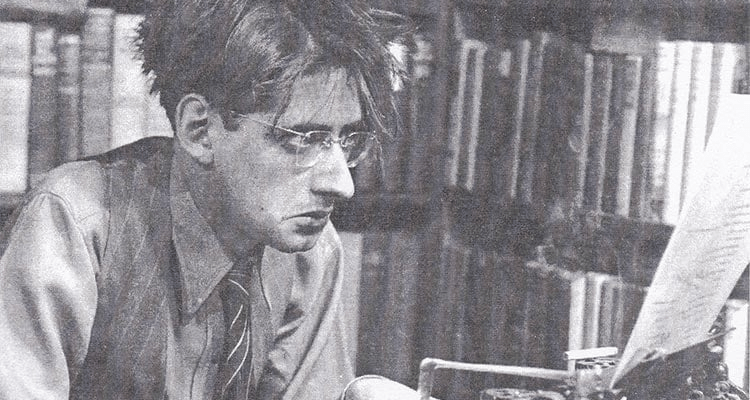
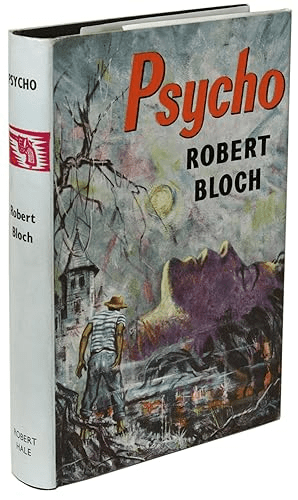


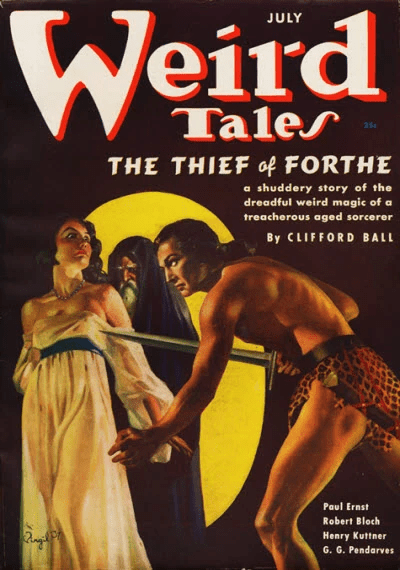
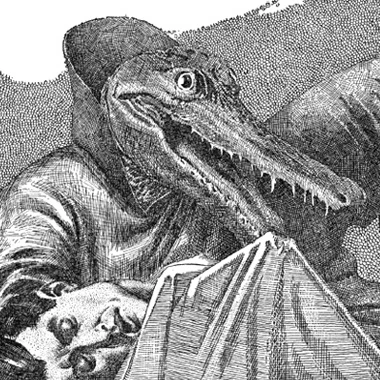


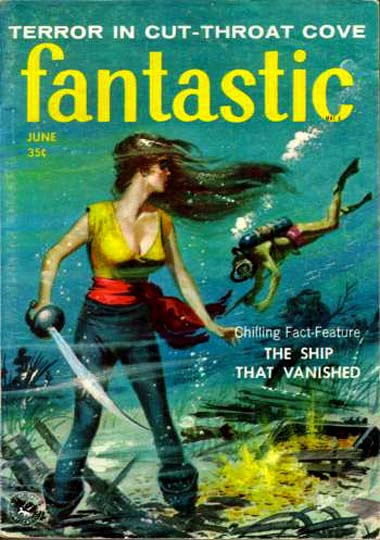

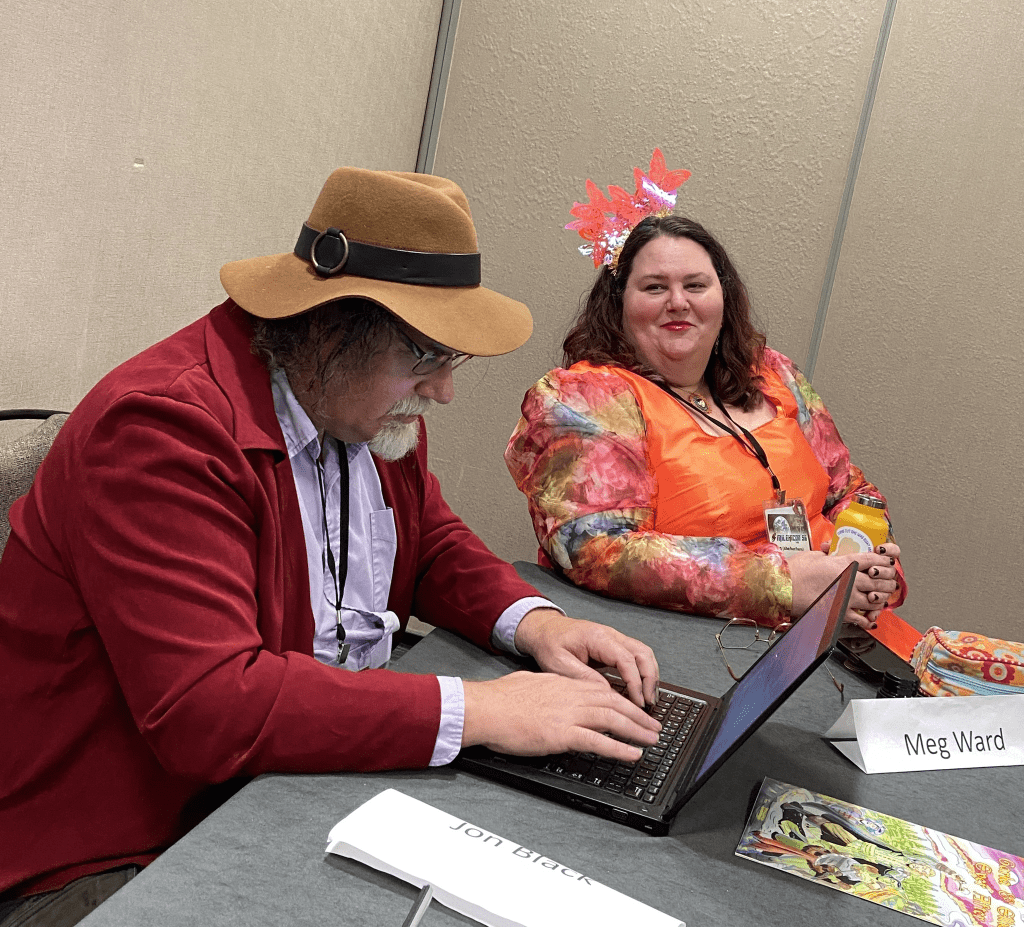







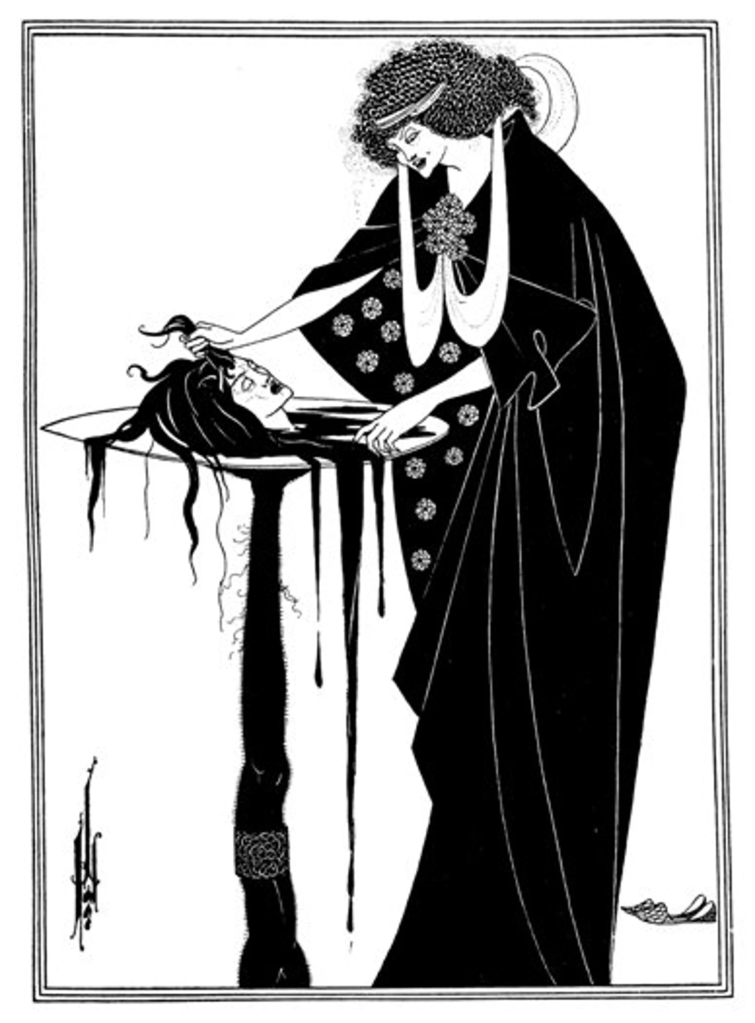
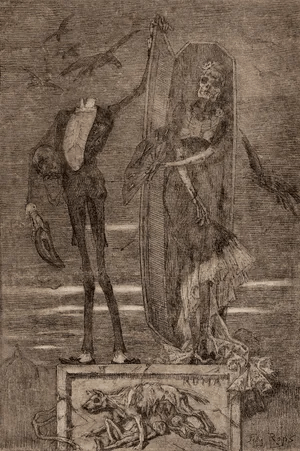




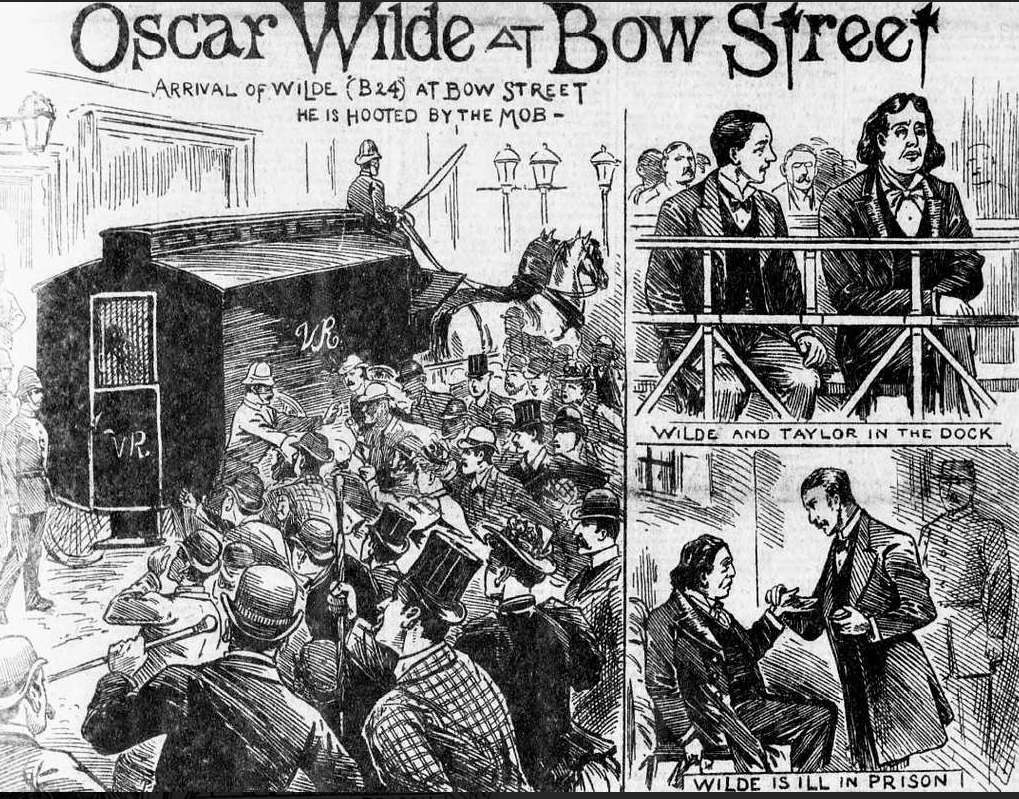
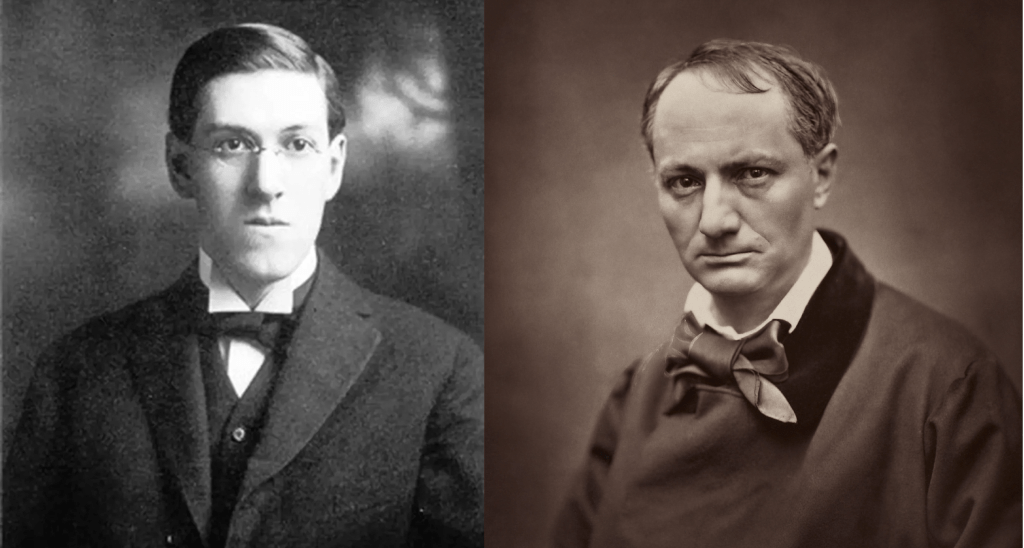

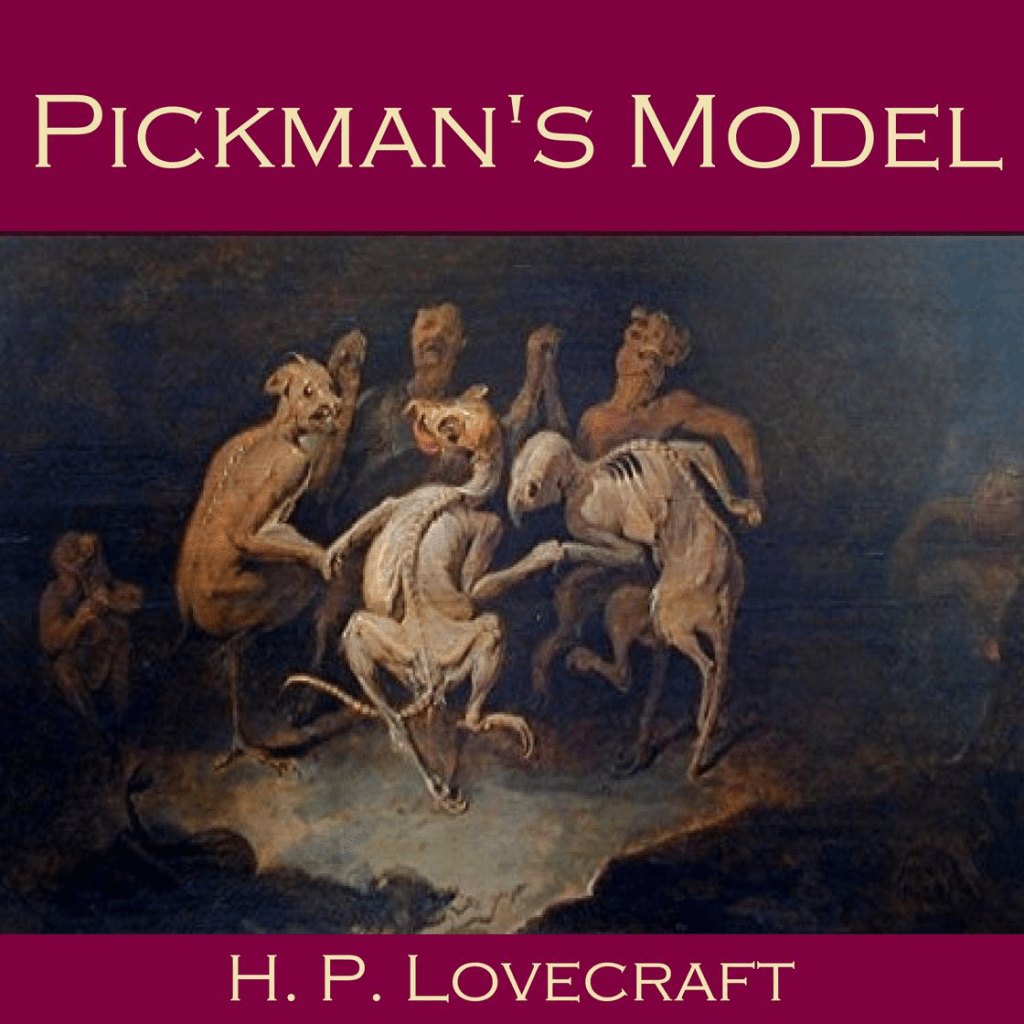


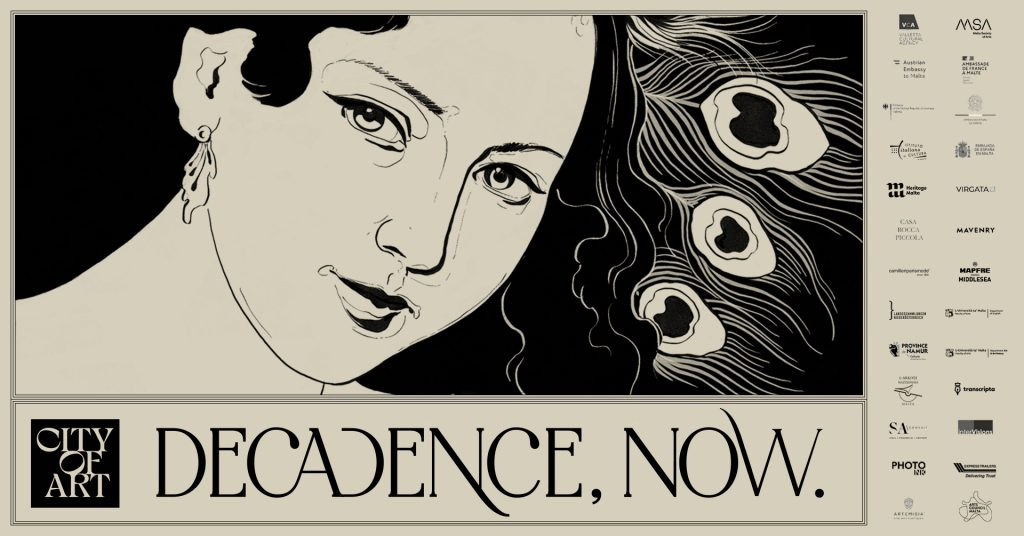


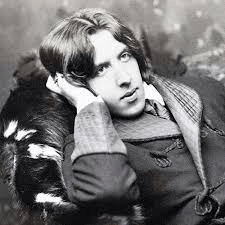
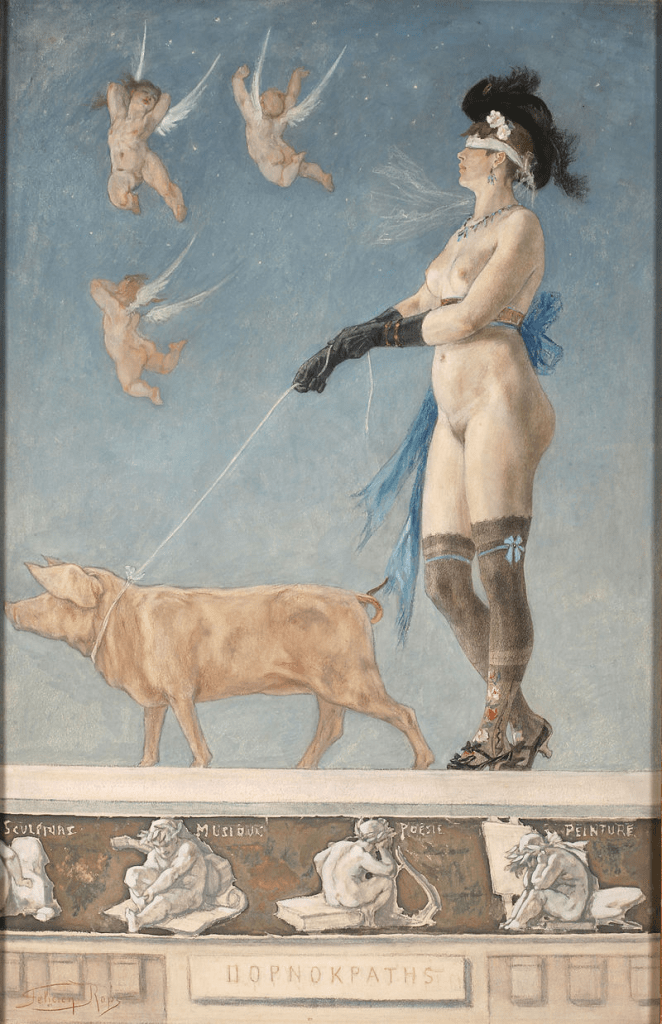












 Jon Black Writes