(This essay has its origins in my research and thoughts for a similarly named panel taking place at NecronomiCon 2024 in Providence, Rhode Island.)
“It takes a great deal of courage to see the world in all its tainted glory and still love it.” – Oscar Wilde

While I am most familiar with the French Decadents and their works, the above quote from the movement’s best known British (okay, Irish) practitioner is an apropos way to begin. In just 20 words, Wilde offers a summation of the Decadent mindset which is both informative and compelling.
Reaching its apogee in the final two decades of the 19th century, Decadence is an artistic movement and, to a lesser extent, a school of thought placing an individual’s aesthetic experience as the highest good, perhaps the only real good. While, in theory, that could code for any number of things, in reality there were a number of attitudes and interests shared by most Decadents. Those shared, consistent features are what we mean when we say “The Decadent Movement.”
These features include rejecting the value of anything external to the individual. While this encompasses conventional society as well as traditional norms and morality, the Decadents also rejected the value of unconventional or alternative norms, values, and societies. Nation, religion, society, indeed any structure or organization beyond the individual are viewed as inherently corrupt, bizarre, meaningless and doomed – indeed, in the Decadent paradigm, it could not be otherwise. Unlike many movements rebelling against tradition and conformity, the Decadents see the natural world, no less than the human society, as, at best, holding no real value and, at worst, as an impediment to actualizing an individual’s aesthetic experience.

In the vacuum created by these broad-reaching rejections, the Decadents elevated libertine self-indulgence and solipsism into a philosophy of elegant nihilism. For Decadents, choosing beautiful and extravagant fantasy over bland and banal reality was not folly but wisdom. Within that context, an individual’s death is synonymous with the end of meaningful experience. Therefore, it is not surprising many Decadent artists displayed a preoccupation with death, decay, and the macabre. It is worth noting here that “Decadence” is French for “decay,” a word with both literal and symbolic connotations connecting to many of those elements which were at the movement’s heart.
All that is the Decadent Ideal. In reality, pursuing the biographies of Decadent artists uncovers many apparent contradictions with that ideal. Many of the Decadents could be warm, caring, and fiercely loyal individuals, exemplified by the lifelong friendship between poet Charles Baudelaire and artist Felicien Rops. Many Decadents cared deeply about the broader issues of the day. Most of the French Decadents were committed Dreyfusards, just as Wilde and Swinburne were passionate advocates for the cause of Irish liberty. Other Decadents wrote rich, beautiful descriptions of the natural world.
If you questioned them, I suspect the Decadents would say there was no real contradiction – because these choices were made, specific attitudes and behaviors embraced, to enhance personal experience, not because they held any extrinsic value.
A Daguerreotype of Decadence Around the World
France, Britain, and, to a lesser extent, the United States were the major centers for the Decadent Movement. It is true the movement had a presence in and impact on many other continental European nations and that some significant Decadents, most notably the Belgian visual artist Felicien Rops, came from elsewhere in Europe. I argue, however, that these regional European scenes remained very much in orbit around the French, and especially Parisian, Decadent scene.

Illustrating France’s role as the beating heart of Decadence, even an annotated list of key French Decadents approaches the scope of an essay of its own. Nevertheless, I have endeavored to name check its most essential figures. Still relatively well known, by his name and reputation if not his work, the poetry of Charles Baudelaire is in many ways the foundation upon which the successive Decadent Movement was built. Two other significant Decadent poets were Paul Verlaine and his protégé/lover, Arthur Rimbaud. That their tempestuous relationship finally suffered an irreparable break after Verlaine (probably accidentally) shot Rimbaud may be one of the most Decadent things ever. Octave Mirbeau was a novelist and playwright whose output places him on par with the poets already named.
Joris-Karl Huysmans and the tragically short-lived Comte de Lautreamont (nom de plume of Isidore Ducasse) are Decadents whose fame rests largely on the strength of a single work. Husymans’ Against Nature (sometimes translated as Against the Grain) is often cited, including for its lack of a traditional narrative or structure as well as its largely unsympathetic protagonist, as the one of the first modern novels. Against Nature has also cast long shadows. Its protagonist, the eccentric, solipsistic, and amoral dandy, Des Esseintes, was a significant inspiration for Wilde’s Dorian Gray and, therefore, on much successive avant-garde, weird, and supernatural/horrific fiction. Lautremont’s lengthy poem Songs of Maldoror is the tale of a bizarre and misanthropic megalomaniac, the eponymous Maldoror, who has not only declared a personal vendetta against God but, at times, seems to be engaged in a quest to kill his nemesis.
Deserving special mention in this essay is Theophile Gautier was a Decadent poet and author whose most notable work is the verse collection The Comedy of Death. Significantly, Gautier wrote several prose pieces which could be considered proto-Weird Fiction, including “The Mummy’s Foot” and “Clarimonde,” occasionally appearing under the title “The Dead Woman in Love,” the story of a young priest who falls in love with a vampire.
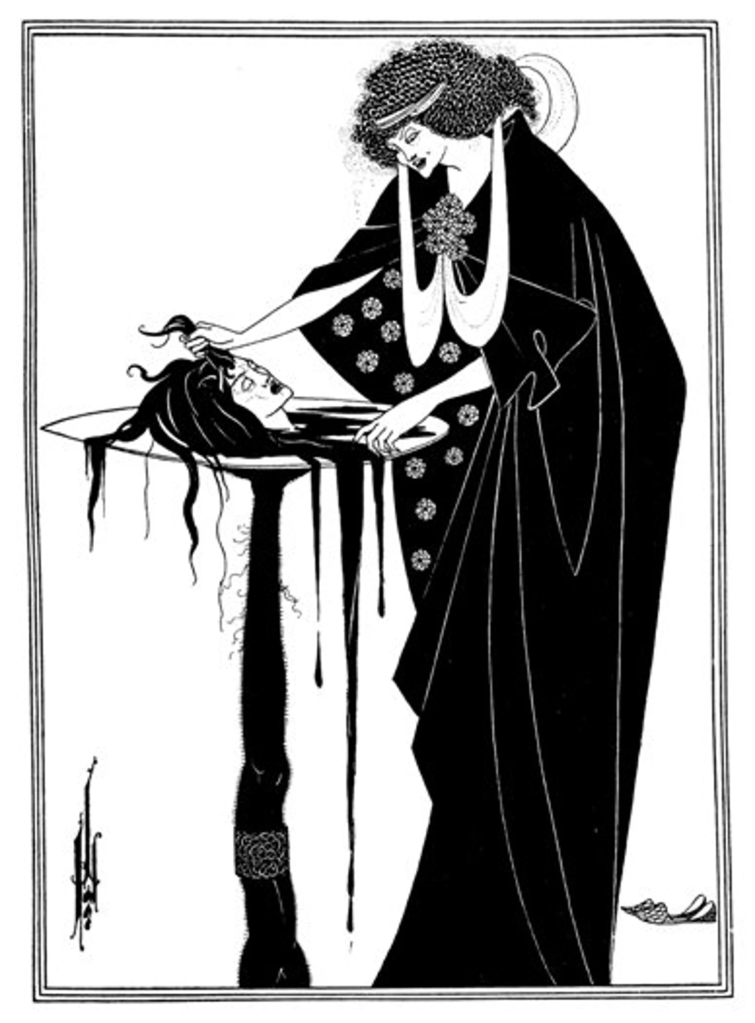
British Decadents seem almost as numerous as their counterparts across the Channel. As noted, one of their leading lights, Oscar Wilde, still remains very much part of the common cultural consciousness – indeed, thought much better of now than by his own contemporaries. Perhaps just as paramount at the time, though fallen into obscurity today, was the novelist, playwright, and poet Algernon Charles Swinburne. In a short life of just 25 years, illustrator Aubrey Beardsley left a treasure trove of startling black and white images that make him perhaps Rops’ only real rival as the definitive creator of Decadent imagery. The author and critic Walter Pater served a function for British Decadence similar to that of Baudelaire in France. Illuminating the parameters of Decadence in its British incarnation, Pater declared that art and life should “burn always with this hard, gem-like flame.” While perhaps not as consistently dazzling in his output as Wilde or Swinburne, Ernest Dawson’s poem “Absinthia Taetra,” part horror story, part paen to that spirit beloved by the day’s avant-garde, is an unquestionable Decadent masterwork.
With their elevation of the individual and sworn enmity against convention and conformity, one might expect the Decadents to have been more accepting of women within their ranks. In reality, as much as any other artistic movement of the day, Decadence was largely a boys club. Britain supplies two of the few significant exceptions. Writing under the collaborative non de plume Michael Field, were Katherine Harris Bradley and Edith Emma Cooper, aunt and niece, living together together in what most scholars now accept was a cosanguinous life partnership, and producing verse and drama under their shared pseudonym.
Decadence arrived in the United States largely through the stature accorded to Wilde by the literati and cognoscenti on the other side of the Atlantic. Two of the most significant American Decadents are a pair of half-brothers now nearly lost to memory: Edgar Saltus and Francis Saltus Saltus (not a typo). In a fitting nod to the link between the Decadent and the Gothic, both brothers now rest in Sleepy Hollow Cemetery. Robert W. Chambers is often cited as the pinnacle of American Decadence. For reasons I discuss below, that accolade is simultaneously well-earned and deceptive. While sometimes cited as members of the Decadent Movement, I would argue, based both upon being a generation younger than the core Decadents and the manner of utilizing Decadence in their work, authors such as H.P. Lovecraft and Clark Ashton Smith are more properly thought of as being influenced and inspired by the Decadents rather than Decadents themselves.
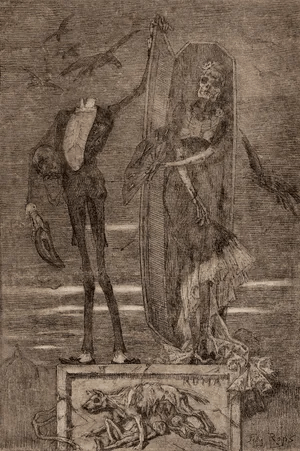
Beyond those three heartlands of Decadence, if there is one figure who must be acknowledged it is the Belgian Felicien Rops. If Continental Decadence had many voices, it really had only one look … and that look was supplied by Rops. He was the illustrator of choice for Decadent writers and poets including d’Aurevilly, Baudelaire, Gautier, Huysmans, and Mallarme. Much of his work was considered pornographic, even by 19th century French standards, and often invokes occult or even explicitly Satanic imagery. More than almost any other Decadent, Rops’ life embodied the movement’s libertine, self-indulgent ideal, exemplified by the tersely-worded letter Rops received from his wife after his eight documented extramarital affair and, for much of his later life, shacking up in a tempestuous but ultimately stable-ish menage-a-trois with the Duluc sisters.
Words the Color of Jaundice
While I would be speaking beyond my expertise to say the Decadent Movement is unique in this regard, it is at least uncommon for its association with a particular color, yellow.

Yellow is, of course, the color of jaundice and we should remember the etymology of that English term, from the French jaune, literally “yellow.” Its adjectival form, jaundiced, has been used to express ideas, themes, and attitudes very much in harmony with the Decadent aesthetic. Recall, also, that Decadence is the French word for “decay.” While, today, black or gray are the colors most commonly associated with decay — with literal decadence in other words — in the 19th century it was yellow which served that function.
In the paper “Shades of Yellow: Representations of Change and Decay in Victorian Literature” Kate Khanna documents examples of this usage at a time when the Decadent Movement was flourishing on both sides of the English Channel. While it takes us a long way from Decadence, Khanna notes Dickens’ extensive use of yellow in Great Expectations to convey both literal and metaphorical decay. Consider Dickens’ descriptions of both Satis House and Miss Havisham herself. Similarly, Charlotte Bronte uses yellow to convey similar themes in Jane Eyre describing Lowood and its garden. Moving back to Decadence, Wilde equates the color with decay in at least two poems, “Symphony in Yellow” and “Impression du Matin.”
French Decadents had another reason for their affinity with yellow. At that time in France, works considered obscene, pornographic, disturbing, or amoral were frequently sold wrapped in concealing yellow cloth or paper, a kind of 19th century warning label or content advisory. Not only did such attributes characterize many Decadent works in the minds of the public, it was a characterization the Decadents themselves embraced, leading them to consider the yellow wrapping a badge of honor as well as a mark of artistic, if not moral, integrity.
It is interesting to note that one of the most common modern US editions of Husyman’s Against Nature, the Penguin Classics edition, uses as its cover art Franz Kupka’s painting “The Yellow Scale.” Kupka’s work shows a figure evocative of Against Nature’s Des Esseintes reclining on a high-backed chair and holding a cigarette as he regards the viewer with an expression of jaded disinterest. Only after taking in the subject matter does one notice the technique: almost the entire canvas, including the figure himself, is rendered in shades of yellow.

Bouncing back across the Channel, the British avant-garde literary periodical The Yellow Book published much content that was explicitly Decadent, including works by Ernest Dowson, Max Beerbohm, and the images of Aubrey Beardsley. The periodical also featured many contributions that, while not explicitly Decadent, showed clear influence from the movement. In choosing the name The Yellow Book, its editors and contributors were declaring themselves a kind of prurient avant-garde and aligning themselves with the simultaneously transgressive and trendy literature flourishing in France, then best exemplified by Decadence.
In addition to his poetry, Wilde’s prose and drama color-checked yellow on at least two significant occasions. The first was the enigmatic “yellow book” which was such a corrupting influence on Dorian Gray (and which Wilde may, in fact, have intended to be Huysmans’ Against Nature). But Wilde’s other reference, in An Ideal Husband, is actually more telling, when Mrs. Chevley proclaims that she “prefers books in yellow colors.” There are also unconfirmed reports Wilde was carrying an issue of The Yellow Book at the time of his arrest in 1895.

Lest we forget that the subject of this essay is the Decadent Movement’s influence on weird fiction, one of the American masterworks of both Decadence weird fiction is Robert W. Chambers’ The King in Yellow. Chambers elevates the connection between the color yellow and decadence by making the collections’ mysterious King in Yellow, its play-within-a-play of the same name, and the cryptic Yellow Sign into archetypal embodiments of the Decadent aesthetic. While not always understanding the full context in which Chambers made that association, later weird fiction authors have often followed in his footsteps by using yellow as symbolic shorthand for decadence, corruption, and madness.
The Decadent Family Tree: Parents, Siblings, and Children
I argue that the Decadent Movement is one of Romanticism’s many children. Like its parent, and like Romanticism’s other children, Decadence rejects tradition as authoritative guide, it celebrates individuality over conformity, prioritizes emotion over logic, elevates the visceral above the rational, and prefers description over plot. But Decadence breaks with its parent movement in two important regards. First, it does not seek a “better way.” Indeed the idea of a “better way” is meaningless in the Decadent paradigm. Second, the Decadent Movement does not look to the natural world as a source of inspiration or guidance.
The Decadents’ toolkit was almost identical with two contemporary movements, Symbolism and Parnassianism. While Symbolism remains widely understood, Parnassianism has fallen into obscurity and, perhaps, a few words should be said about it. Taking its name from Mount Parnassus, home of the muses of classical mythology, while largely sympathetic to Romanticism, Parnassianism sought a measure of structure and rigor to its artistic expressions. The Parnassians were also influenced by the ideas of 19th century existentialism, especially Schopenhauer.

While Decadence shared its toolkit with those other movements, it differed in how those tools were used. For both Symbolism and Parnassianism, their artistic tools were a means to create signs and signifiers, (symbols, if you will) pointing to higher truths. For Decadents, those tools were an end in themselves, a fully complete truth – perhaps the only complete truth.
The Relationship between the Decadent and the Gothic
The relationship between the Gothic and the Decadent is a complex one. Perhaps, at some future time, I will ponder and write on this relationship after more reflection. For now, I admit I’m shooting from the hip. There are significant and obvious parallels between the two movements: an extreme and extravagant aesthetic as well as a fixation on unusual locations and unconventional characters, a preoccupation with the morbid and macabre, and explicit or implicit questions of morality/amorality, nihilism, and fate.

The primary difference between the Gothic and the Decadent is the context in which those elements operate. Gothic literature is built on the contact, conflict, and resolution, for good or for ill, between a mundane, conventional, and natural world and a world which is eccentric, extravagant, and often both decadent (in the word’s colloquial usage) and supernatural – in short, a world that is very much like the Decadent aesthetic. In Gothic literature, it is typically protagonists of that first world struggling against antagonists and challenges from the second.
The Decadent Movement flips that Gothic convention of conflict on its head or ignores it entirely. Decadence sees the world through the eyes of Roderick Usher rather than Fall’s unnamed protagonist or sees it through the eyes of both Montresor and Fortunato, with no judgment passed on either.
Laius and Oedipus: Decadence, its Children, and The Great War

The Decadents had artistic children, or at least stepchildren. The movement’s fingerprints can be found on Dada, Surrealism, and Existentialism of the 20th century variety. What separates the children from the parent, more than simple chronology, is the First World War.
On the one hand, the bloody years of 1914-1918 seem like a moment of supreme validation for Decadence, an apparent confirmation of the Decadents’ understanding of civilization, especially Western civilization, as fundamentally decrepit and corrupt. On the other hand, that terrible conflict came with real consequences, persuading artists of the post-1914 world that the solipsism and indifference seemingly so inherent to Decadence were indulgences they could not afford.

If Dada was just as nihilistic as its Decadence, henceforth it was to be nihilism with a purpose. If Surrealism joined Decadence in condemning conformity to outer truths, it approached the search for inner truth with an almost religious seriousness and sincerity. A new generation of existentialists would exchange the eccentric finery of a dandy for worker’s dungarees or academic’s threadbare suits.
As an aside, it is interesting to note that the acceptance or rejection of nihilism between movements with otherwise nearly identical toolkits, which was a fundamental divide between Dada and Surrealism, mirrors almost perfectly the earlier divide between Decadence and Symbolism.
The End of Decadence?
The proximate cause for the decline of the classical Decadent Movement was simple as an actuary table: demographics and human lifespan. Many Decadents died young, as the examples of Beardsley and Lautreamont in this essay, testify. By the last decade of the 19th century and first decade of the 20th, most of the rest were reaching the end of their allotted span. That, of course, would not preclude the possibility of new members, those from younger generations, joining the movement.
For the same reason it gave rise to Dada, Surrealism, and 20th century Existentialism, the First World War was the ultimate cause of Decadence’s decline, marking a final end to an active, global Decadent movement. Its surviving practitioners either joined those new movements or aged into obscurity or curiosities as the world left them behind.
A Separate Peace? “Gross Indecency” and the End of British Decadence
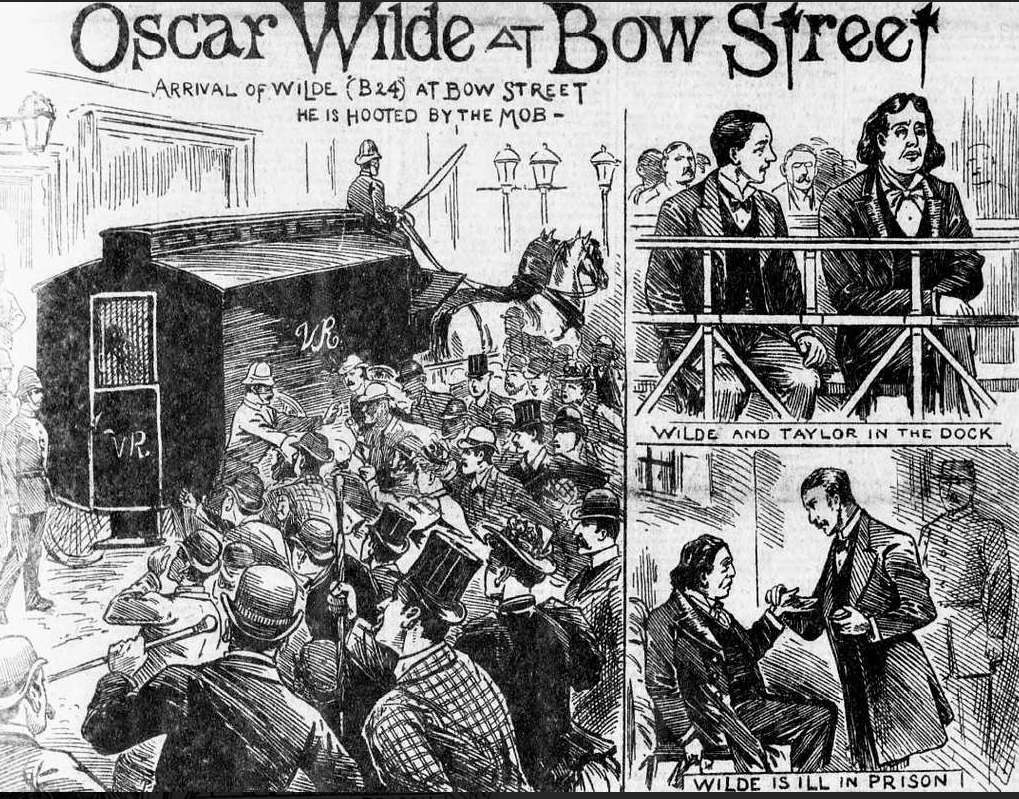
It should be noted that, by this time, British Decadence had already suffered a wound which, even absent the First World War, might have been fatal. Most readers will be familiar with Oscar Wilde’s 1895 trial for “gross indecency.” For those that are not, information is easily available online. While the driving force between Wilde’s arrest and trial was Marquis of Queensbury’s seeking to punish Wilde for his relationship with the Marquis’s son, it had a profoundly suppressive effect on the British Decadent Movement of which Wilde was the leading light. It would be unwise to write this off as mere collateral damage. This effect on British Decadence would have been a feature not a bug for members of Britain’s social and artistic establishment, happy to ruin the most famous/infamous member of a movement which they saw as increasingly distracting the public from their proper focus: the course of Empire and devotion to the Queen.
Indeed, those driving Wilde’s persecution may have been very conscious of this ancillary “benefit.” I cannot help but notice that, in Wilde’s trial, the prosecutor seemed to take great pains to get Wilde to acknowledge that the “yellow book” responsible for the moral and spiritual ruination of Dorian Gray was none other than Huysmans’ Against Nature, very arguably the greatest of the Decadent novels. It is widely acknowledged that Huysmans’ protagonist, Des Esseintes, was a major inspiration (perhaps the major inspiration) for Gray himself.
Decadence and Weird Fiction
It is often said that the Decadent movement influenced weird fiction and its practitioners. Less common is discussion of the nature and specifics of that influence. What specific tools did weird fiction borrow from the Decadent toolbox? Which authors and works have the Decadents’ fingerprints especially strongly on them?
In Paul Verlaine’s metatextual Art Poetiq, a poem about poetry, he lays out several elements for Decadent poetry. Verlaine gives great weight to the Odd, the Vague, the musical, as “veils,” rather than showing a thing directly. It is interesting to compare that with the conventions of weird fiction and cosmic horror.
Indeed, if one considers the poetry of two of the most celebrated practitioners from each movement, Charles Baudelaire and H.P. Lovecraft, there are lines of their poetry which, ripped out of context, would be almost impossible to identify as the work of one creator or the other. [image of Lovecraft/Baudelaire]
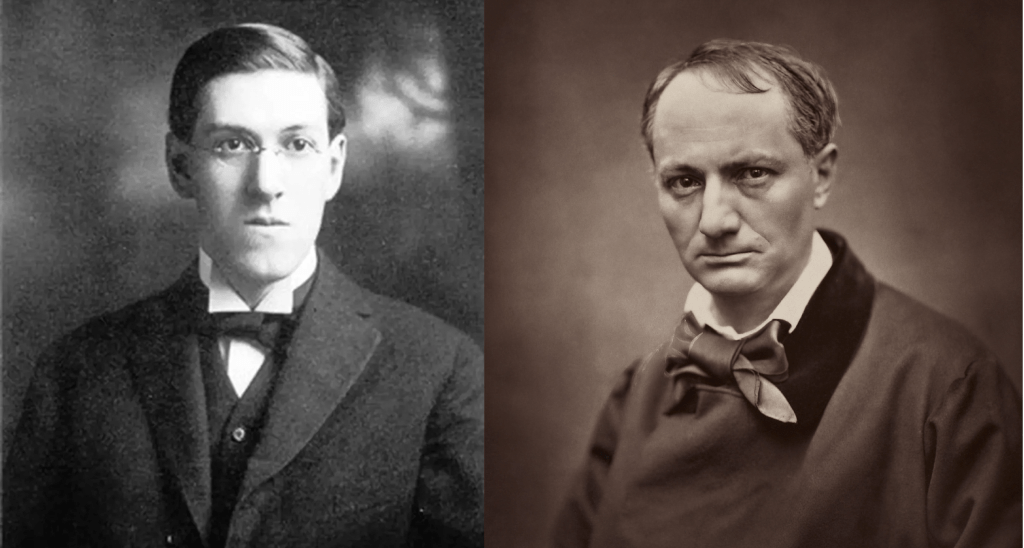
(by verse at least)
I began my remarks at the NecronomiCon panel on Decadence and Weird Fiction with a reading of Baudelaire’s poem “Parisian Dream,” from his celebrated collection Flowers of Evil. I asked the audience, as I read, to give careful attention to Baudelaire’s vocabulary and phrasing, and compare it with the language Lovecraft used in pieces such as “Iranon”, “The White Ship,” “Nathicana,” and even the stories of The Dream Cycle.
While, in this essay, I have generally linked to the poems referenced, in this case, for effect, I have reproduced “Parisian Dream.”
Parisian Dream
(translation by Edna St. Vincent Millay)
That marvelous landscape of my dream —
Which no eye knows, nor ever will —
At moments, wide awake, I seem
To grasp, and it excites me still.
Sleep, how miraculous you are —
A strange caprice had urged my hand
To banish, as irregular,
All vegetation from that land;
And, proud of what my art had done,
I viewed my painting, knew the great
Intoxicating monotone
Of marble, water, steel and slate.
Staircases and arcades there were
In a long labyrinth, which led
To a vast palace; fountains there
Were gushing gold, and gushing lead.
And many a heavy cataract
Hung like a curtain, — did not fall,
As water does, but hung, compact,
Crystal, on many a metal wall.
Tall nymphs with Titan breasts and knees
Gazed at their images unblurred,
Where groves of colonnades, not trees,
Fringed a deep pool where nothing stirred.
Blue sheets of water, left and right,
Spread between quays of rose and green,
To the world’s end and out of sight,
And still expanded, though unseen.
Enchanted rivers, those — with jade
And jasper were their banks bedecked;
Enormous mirrors, dazzled, made
Dizzy by all they did reflect.
And many a Ganges, taciturn
And heedless, in the vaulted air,
Poured out the treasure of its urn
Into a gulf of diamond there.
As architect, it tempted me
To tame the ocean at its source;
And this I did, — I made the sea
Under a jeweled culvert course.
And every color, even black,
Became prismatic, polished, bright;
The liquid gave its glory back
Mounted in iridescent light.
There was no moon, there was no sun, —
For why should sun and moon conspire
To light such prodigies? — each one
Blazed with its own essential fire!
A silence like eternity
Prevailed, there was no sound to hear;
These marvels all were for the eye,
And there was nothing for the ear.
I woke; my mind was bright with flame;
I saw the cheap and sordid hole
I live in, and my cares all came
Burrowing back into my soul.
Brutally the twelve strokes of noon
Against my naked ear were hurled;
And a gray sky was drizzling down
Upon this sad, lethargic world.
The Decadents bequeathed to weird fiction a vocabulary with which to build a rich, dark language for expressing ideas the two movements shared: a love of the macabre and bizarre; the irrelevance of humans and their notions; the almost Spenglerian notion and imagery of civilizations and cultures growing enfeeble, senile, and beginning to rot while still alive.
Lovecraft, Chambers, and Howard: Three Views of Decadence in Weird Fiction

Lovecraft signals that his usage of Decadent vocabulary, phrasing, and imagery was not a coincidence or case of convergent evolution but, instead, a deliberate and conscious homage or borrowing. He begins his short story, “Hypnos” with a quote from Baudelaire. In At the Mountains of Madness, Lovecraft alludes to the paintings of Decadent artist Nikolai Roerich, and clearly expects his readers to understand the reference.
While I freely admit that this not only armchair analyzing but beyond the scope of this essay, I cannot miss the many similarities between Lovecraft’s childhood and that of Des Esseintes, the protagonist of Huysmans’ Against Nature.
The Decadents’ influence on Lovecraft is most obvious in his poetry and his more poetical, dream-like prose, including “The White Ship” and “Quest of Iranon.” But the superlative example is “Celephaïs.” With a protagonist prioritizing his artificially created and curated dream world over reality, Celephaïs embodies the essence of Decadence as powerfully as anything by the Decadents themselves.
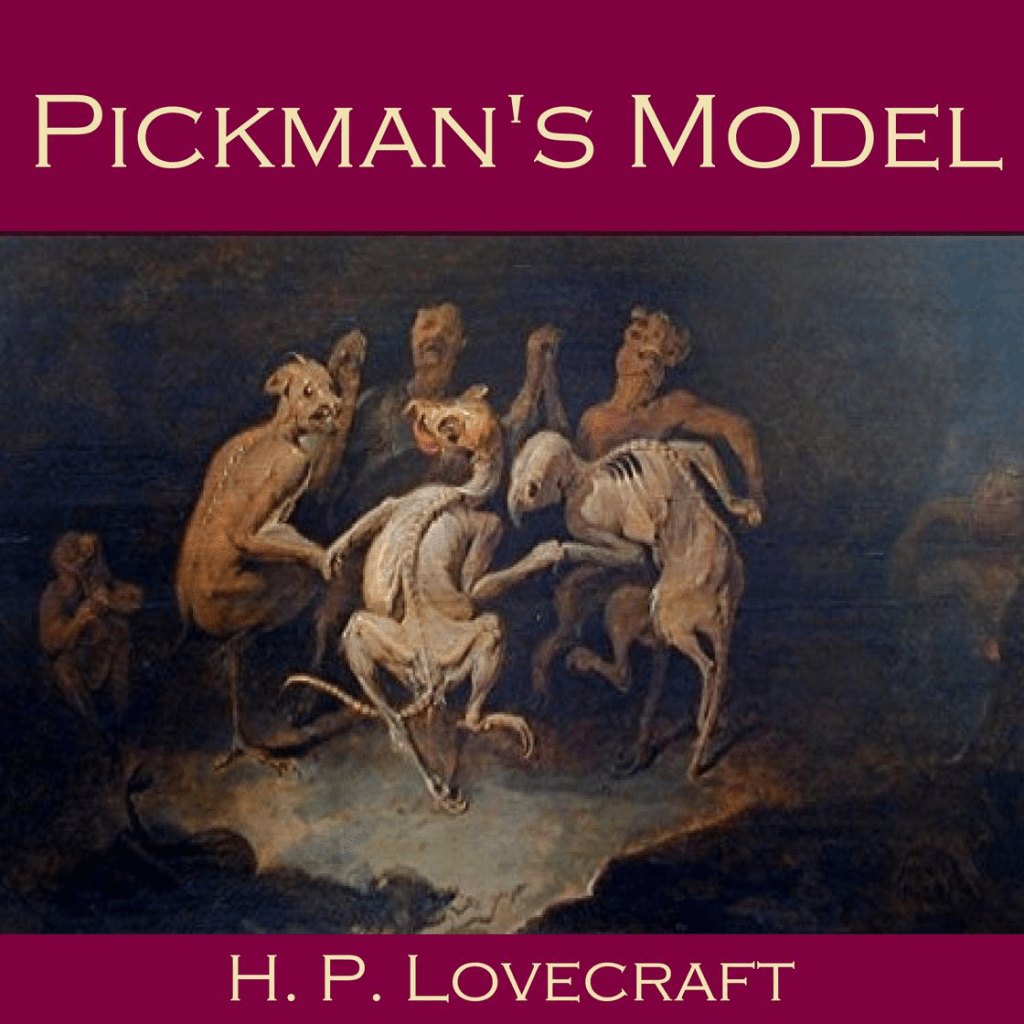
In Lovecraft’s more traditional prose, three stories stand out for their Decadent influence: “The Hound,” “Pickman’s Model,” and “The Tomb.” The lifestyle and activities of St. John and the unnamed narrator of “The Hound” are very much the Decadent ideal. The ghouls of “Pickman’s Model” offer an exaggerated, hyperbolic portrayal of Decadence, with the character of Richard Upton Pickman as an at least nominally human point of view to underscore the ghouls’ nature to the reader. The descriptions of Jervas Dudley’s childhood in “The Tomb” are uncannily like that of the protagonist Des Esseintes in Against Nature. While “The Tomb’s” climax is classic Gothic, the story’s descriptions of the deeds and appetites of Jervas Dudley’s ancestors are at least as much, if not more, Decadent than Gothic.
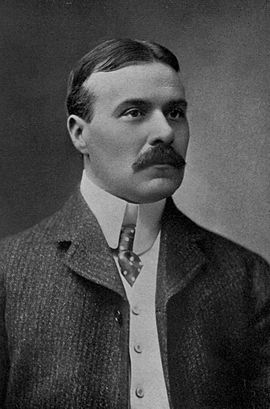
If we were to step away from our preconceptions and objectively consider the totality of his work, Robert W. Chambers would be remembered as a writer of Art Nouveau historical romances ranging from the masterful to the maudlin. And yet … there is The King in Yellow. A collection of short stories and poems, it is best remembered for those surreal, dreamlike, and disturbing selections revolving around the mysterious, madness-inducing play, also known as “The King in Yellow,” and the ambiguous but menacing figure also-also known as the King in Yellow.
The work is an anomaly in Chambers’ oeuvre, yet it is the one accomplishment securing his continued recognition nearly a century after his death. The King in Yellow is widely regarded as the most significant work of non-Lovecraftian weird fiction ever produced. Indeed, it is not difficult to find authors, critics, scholars with impeccable weird fiction credentials who, as literature and as the pinnacle of weird fiction, consider The King in Yellow superior to any of Lovecraft’s work. Chambers’ use of decadent elements in King in Yellow is less explicit but more pervasive and insidious than in Lovecraft. For Lovecraft, Decadence was a second-order companion of cosmic horror, the cherry on top of the sundae. In The King in Yellow, Decadence is both the message and the medium.

There is another weird fiction author whose work is filled with the language, imagery, and concepts of Decadence, yet his name is almost always absent from discussions of the Decadent Movement’s influence on weird fiction. That author is Robert E. Howard. I suspect Howard’s exclusion from these conversations results from the distinctive way he uses Decadence in his narratives. In Howard’s writing, Decadence is almost always othered: it is a feature of the civilizations which protagonists such as Conan, Kull, and Bran Mac Morn struggle against (and sometimes simultaneously covet). Even Solomon Kane is a kind of refugee from, and nemesis for, Howard’s Decadently-coded version of early modern Anglo-Saxon culture which birthed Kane.
The exception to Howard’s treatment of Decadence as described above, of course, is The Black Stone. In Justin Geoffrey, Howard created a Decadent protagonist to rival anything in Lovecraft … or Huysmans or Baudelaire.
The Decadent Movement’s Ongoing Impact on Fiction (Weird and Otherwise)

One hint Decadence’s continuing influence on fiction is the evolution of the New Orleans into the same kind of shorthand for Decadence, of both the big-D and little-d varieties, that Paris once functioned as. This symbolic use of New Orleans can be found far beyond the confines of weird fiction, cosmic horror, or, indeed, any kind of horror. Obvious examples include Anne Rice and William Joseph Martin. Consider also films such as Elia Kazan’s Panic in the Streets and Paul Schrader’s Cat People. Hell, getting out of the cinema and onto the stage, what about Streetcar?

Such widely understood shorthand does not evolve where it is not needed or when it will not be comprehended. Contemporary readers and audiences understand the conventions and connotations of this use of New Orleans, even if most of them may be unfamiliar with the Decadent Movement.
Beyond prose and poetry, the Decadent aesthetic has powerfully influenced tabletop role-playing games. Seminal game worlds such as White Wolf’s World of Darkness (especially Vampire: The Masquerade) as well as Kult and In Nomine embody many of the tropes and conventions of Decadence not only in their world building but in their fundamental game mechanics.
While this next assertion has raised eyebrows in the past, I would argue that the contemporary Goth subculture is, in reality, at least as much Decadent as it is genuinely Gothic.
Final Thoughts
One reason I enjoy panels such as the one at NecronomiCon is that, during my preparatory research, I often come to see topics in a different light. I went into my preparation for this panel believing the world has seen a gradual but sustained decline in the Decadent Movement’s influence. I now believe that, while that influence has become diffuse, it has not been diluted. The modern world knows the Decadent Movement, but it knows it after 150 years of the telephone game or as images reflected across a series of mirrors, from one to the next.
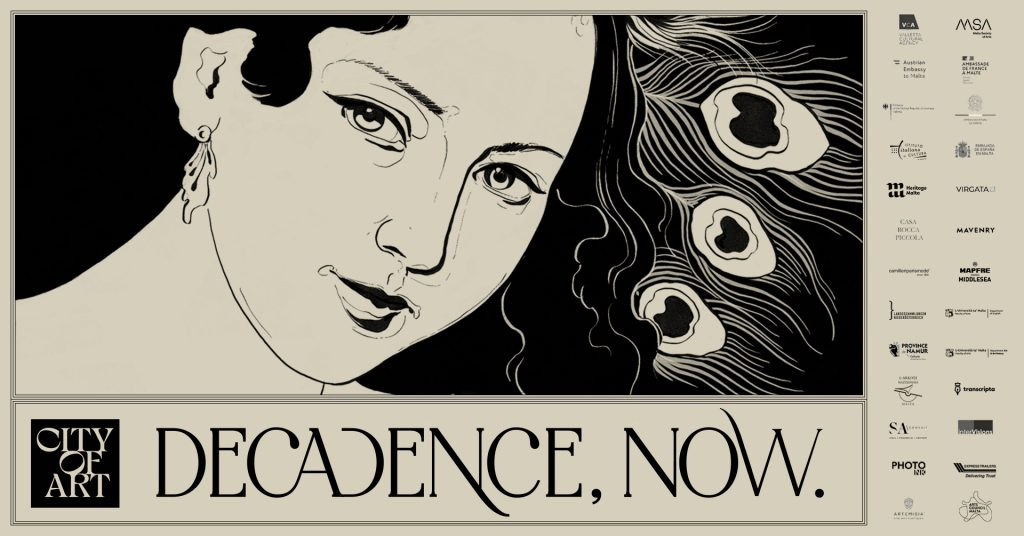
When it comes to the Decadents, it is clear that Lovecraft and Chambers fully understood what and who they were borrowing from. Indeed, in Chambers’ case, it is an open topic of debate as to whether he was a borrower or genuine practitioner. Successive generations of weird fiction and cosmic horror authors have often borrowed these threads of Decadence from Chambers and Lovecraft, even if most of them did not understand their context or pedigree.
Of course, one can ask, does it matter that later authors have not always understood exactly what they are borrowing or where it originally comes from. I suspect the Decadents themselves would be the first ones to answer, it does not.
The idea of art and beauty existing independently of any external truth or valuation. The notion that there is no higher good than an individual’s experience. It is likely that those ideas have always been with humanity, or at least within some humans. But the Decadents were among the first to crystallize them into something so tangible it could be named, discussed, seen, and felt. And, if the edges of that image have grown fuzzy since the 19th century, the core remains clearly visible. The axioms of the Decadent Movement are capable of compelling or revolting, sometimes both at once. Perhaps that is why the aesthetic and conventions of Decadence still resonate and continue provoking such strong emotions.
Author’s Statement

For over two decades, my primary interests in the visual arts have been Dada, Surrealism, and Cubism. It is through its influence on Dada and Surrealism that I have come to have an interest in the Decadents. This, perhaps, also explains why my major focus has always been the French Decadents.
While primarily a Mythos supernatural mystery about Cubism, my novelette, “The Green Muse,” appearing in the anthology The Chromatic Court, name checks several of the French Decadents as well as Rops and makes both Comte de Lautreamont and Paul Verlaine part of its backstory.
For the NecronomiCon 2024 session, my fellow panelists and I collaborated to put together a recommended reading list of both Decadent works and weird fiction strongly influenced by Decadence.
 Jon Black Writes
Pingback: HPLinks #10 – Nazi subs, weird decadents, ancient astronauts, cosmic radios, painted zoogs, a new Bram Stoker tale and more | Tentaclii
Pingback: Sensor Sweep: Arkham House, D&D, Ray Bradbury, Horror Comic Books – castaliahouse.com
An excellent introduction and summary of a misunderstood movement. Well done.
LikeLike